
Search Texas Divorce Records
Texas divorce records are public court documents filed at the District Clerk's office in the county where the case was heard. The state has 254 counties, and each one maintains its own set of divorce case files. Many counties now offer online case searches through their own portals or through the statewide re:SearchTX system. For the complete case file or a certified copy of the Final Decree of Divorce, you need to contact the District Clerk in the county where the divorce was granted. They can pull records by party name or cause number and make copies while you wait.
Texas Divorce Records Overview
Where to Find Texas Divorce Records
The District Clerk's office is where divorce records are kept in Texas. Each of the 254 counties has its own District Clerk that falls under one of the state's judicial districts. The clerk keeps the full case file for every divorce filed in the county. That file holds the Original Petition for Divorce, the answer or waiver, financial disclosures, and the Final Decree of Divorce. The District Clerk in each county manages these records and can make copies for you.
Texas also has a state-level vital records office. The Texas Department of State Health Services (DSHS) Vital Statistics Unit keeps a central index of divorces going back to 1968. They can issue a divorce verification letter but not the full court documents. If you need the actual decree or judgment, you have to contact the District Clerk in the county where the case was filed. DSHS can confirm that a divorce took place and give you the county and approximate date, which helps when you don't know where to start looking.
The Texas Department of State Health Services Vital Statistics Unit maintains the statewide divorce index and can issue verification letters for divorces recorded from 1968 forward.
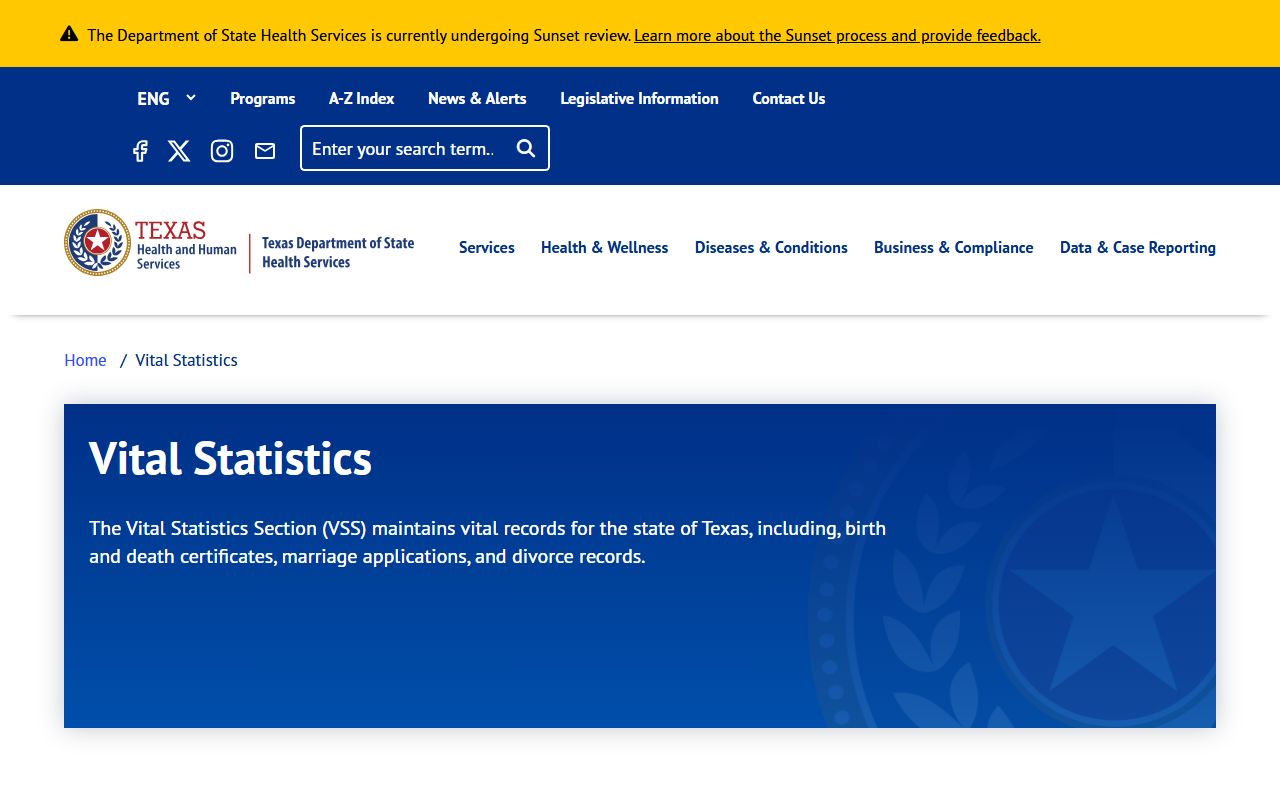
The DSHS index is a starting point. For the actual Final Decree of Divorce, contact the District Clerk in the county where the case was filed.
Note: For divorce decrees and full case files, go to the District Clerk in the county where the case was filed. The Texas DSHS Vital Statistics Unit only issues divorce verification letters, not copies of court documents.
How to Search Divorce Records in Texas
Texas gives you several ways to search for divorce records. Online access is the fastest option for basic case details. Visiting the courthouse in person works best when you need certified copies or want to review the full case file.
The re:SearchTX system is a statewide public access portal for court case information. It covers District Courts in many Texas counties. You can search by party name, cause number, or case type. The system shows party names, case status, hearing dates, and docket entries. It is free to use. Not every county is on the system yet, but the number keeps growing. Many larger counties like Harris, Dallas, and Bexar also run their own online search portals.
The Texas Judicial Branch maintains statewide resources for court records access, including the re:SearchTX portal and electronic filing through eFileTexas.

The Texas Judicial Branch website links to court search portals, standardized forms, and local court resources for all 254 counties.
To search on re:SearchTX, you need:
- Full name of at least one spouse
- County where the case was filed (or search statewide)
- Approximate year of the filing if you have it
You can also go to any District Clerk's office in person. Head to the county where the divorce was filed. The clerk can pull up records and make copies. Certified copies cost more than plain ones. Some counties let you request copies by mail if you can't visit in person. Call the District Clerk first to ask about their process and fees.
Types of Divorce Records in Texas
Texas uses the term "divorce" in common practice, though the legal filings reference "Suit for Dissolution of Marriage." The key document is the Final Decree of Divorce, which is the court order that ends the marriage. This paper lays out all the terms: property division, custody arrangements, child support, and spousal maintenance. Once a judge signs it and the case is final, the marriage is over.
An Agreed Decree is what you get when both spouses agree on everything. They sign a settlement agreement, and the court enters the decree based on that deal. When spouses can't agree, the case goes to trial, and the judge decides the terms in a contested decree. Either way, the final document goes into the court file at the District Clerk's office.
A divorce case file in Texas usually has:
- Original Petition for Divorce
- Citation and proof of service (or waiver of service)
- Answer from the other spouse (if filed)
- Sworn Inventory and Appraisement of property
- Temporary orders for custody or support
- Parenting plan or conservatorship order (if children are part of the case)
- Settlement agreement or trial findings
- Final Decree of Divorce
Most of these documents are public. Anyone can ask the District Clerk for copies. Some items like financial statements may be sealed in certain situations. Records involving minors may also have restricted access.
Texas Divorce Laws and Rules
The Texas Family Code is the main source of law for divorce in Texas, covering everything from filing requirements to property division and child custody.

The Texas Constitution and Statutes website gives free public access to the full text of the Texas Family Code and all related laws.
All divorce law in Texas is in the Texas Family Code Chapter 6. This chapter covers everything from filing the petition to dividing property to setting up custody. The law uses the term "Suit for Dissolution of Marriage" as the formal name for divorce proceedings.
Under Texas Family Code § 6.301, at least one spouse must have been a domiciliary of Texas for six months before filing. You also need to have been a resident of the county where you file for at least 90 days. If both spouses live in different Texas counties, either county works. Military members stationed in Texas can also file here.
Texas allows both no-fault and fault-based grounds for divorce. Under Texas Family Code § 6.001, the court can grant a divorce on the no-fault ground of "insupportability," which means the marriage has become insupportable because of discord or conflict that destroys the legitimate ends of the marriage and there is no reasonable expectation of reconciliation. Fault grounds include cruelty, adultery, conviction of a felony, abandonment, living apart for at least three years, and confinement in a mental hospital.
60-Day Waiting Period: Texas law requires a mandatory 60-day waiting period after the petition is filed before a divorce can be finalized, under Texas Family Code § 6.702. The court cannot grant the divorce until at least 60 days after the suit was filed. Exceptions exist in cases involving family violence.
Texas is a community property state. Under Texas Family Code Chapter 7, the court divides marital property in a way the court deems "just and right." Community property is generally anything acquired during the marriage. Separate property includes what each spouse owned before marriage, plus gifts and inheritances received during marriage, as long as it was kept separate.
Child custody rules are in Texas Family Code Chapter 153. Texas uses the term "conservatorship" instead of custody. The court uses the best interest of the child standard. Texas looks at multiple factors when deciding conservatorship, including the child's physical and emotional needs, the stability of each home, and the plans each parent has for the child. Joint managing conservatorship is the presumption in Texas.
Divorce Filing Fees in Texas
Filing for divorce in Texas costs roughly $250 to $400. The exact fee varies from county to county since each District Clerk sets its own schedule within state guidelines. In larger counties like Harris, the filing fee runs about $350 without children and $365 with children. Dallas and Bexar counties charge similar amounts. The petitioner pays this fee when filing the Original Petition for Divorce.
Service of process adds to the cost. You can have the constable or sheriff serve the papers for about $75 to $100, depending on the county. Private process servers charge their own rates. If both spouses agree, the respondent can sign a Waiver of Service and skip the cost of a process server entirely.
Getting copies of existing divorce records has its own fees. The District Clerk charges per page for plain copies, usually $1 per page. Certified copies cost more, typically $2 per page plus a certification fee. Fees vary by county, so call the specific court to ask. The DSHS Vital Statistics Unit charges $20 for a divorce verification letter from their central index.
Fee waivers are available for people who can't afford to pay. You file a Statement of Inability to Afford Payment of Court Costs under Texas Rule of Civil Procedure 145. You need to show your income and expenses. The court reviews your statement and decides if you qualify. If you receive certain government benefits or earn below 125% of the federal poverty line, you generally qualify. Forms are available at the courthouse or on the Texas Courts website.
Tip: Filing fees change from time to time. Contact the District Clerk in your county or check their website to confirm the latest costs before you file.
How to Get Copies of Texas Divorce Records
Electronic filing is now required for most civil filings in Texas. eFileTexas.gov is the official state e-filing portal used by District Courts across all 254 counties.
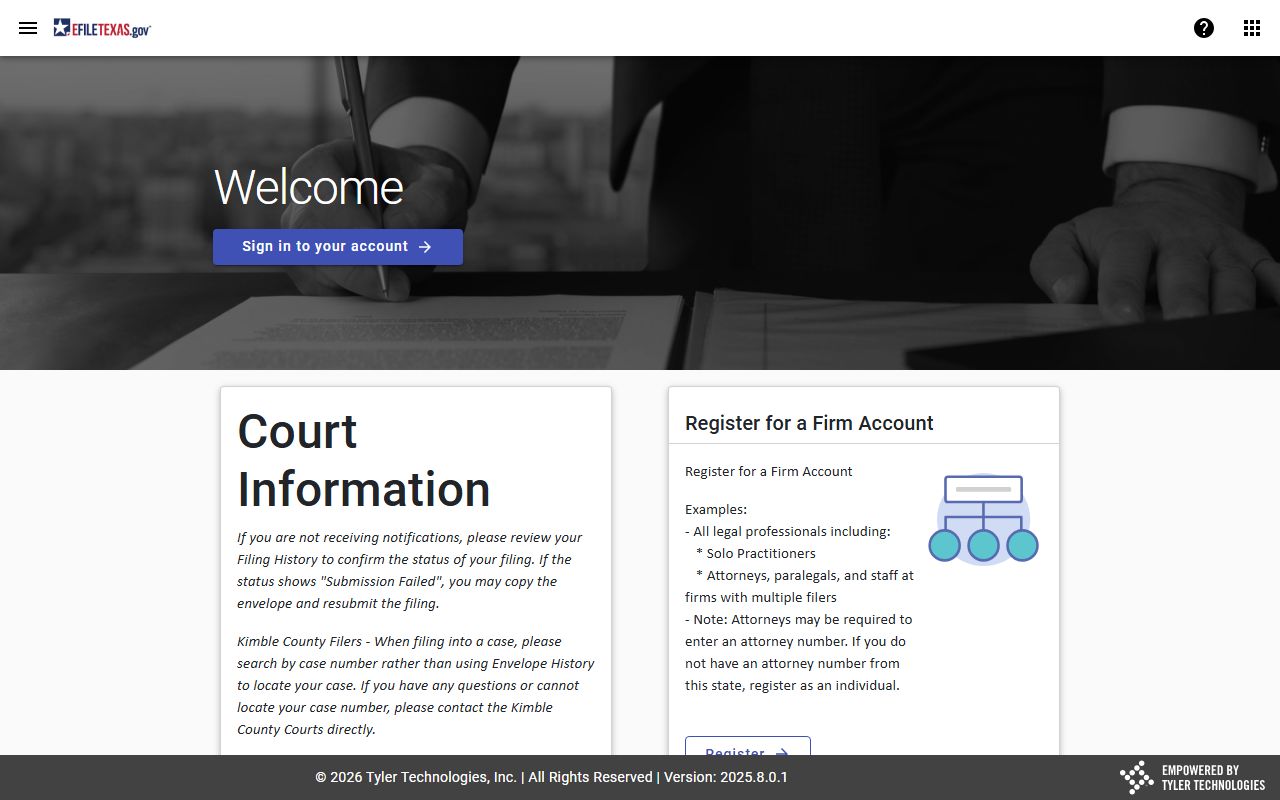
eFileTexas handles electronic submission of divorce petitions, motions, and decrees for courts across Texas.
To get copies of a divorce record in Texas, contact the District Clerk in the county where the case was filed. You can visit in person or call the clerk's office. They can pull up the file by name or cause number. Plain copies cost less than certified ones. Certified copies carry the court seal and are needed for things like name changes or proving your marital status to another agency.
You can also search for basic case info online at re.search.txcourts.gov. The re:SearchTX system shows case status, party names, and docket entries for participating counties. It does not have full document images in most cases. For the actual Final Decree of Divorce or other papers from the file, you need to contact the courthouse.
Some counties accept requests by mail. You usually send a written request with the case details and a check or money order for the copy fees. Include a self-addressed stamped envelope. Wait times depend on the court's workload. In-person requests can often be handled the same day. Mail requests may take a week or two.
For a basic verification that a divorce happened, you can contact the Texas Department of State Health Services, Vital Statistics Unit. They keep a statewide index of divorces from 1968 to the present. The fee is $20. You can request a verification online through Texas.gov, by mail, or in person at their office in Austin. Visit dshs.texas.gov for instructions.
Legal Help for Divorce in Texas
The Texas State Law Library divorce guide is one of the best free resources for understanding the process, statutes, and forms involved in a Texas divorce.
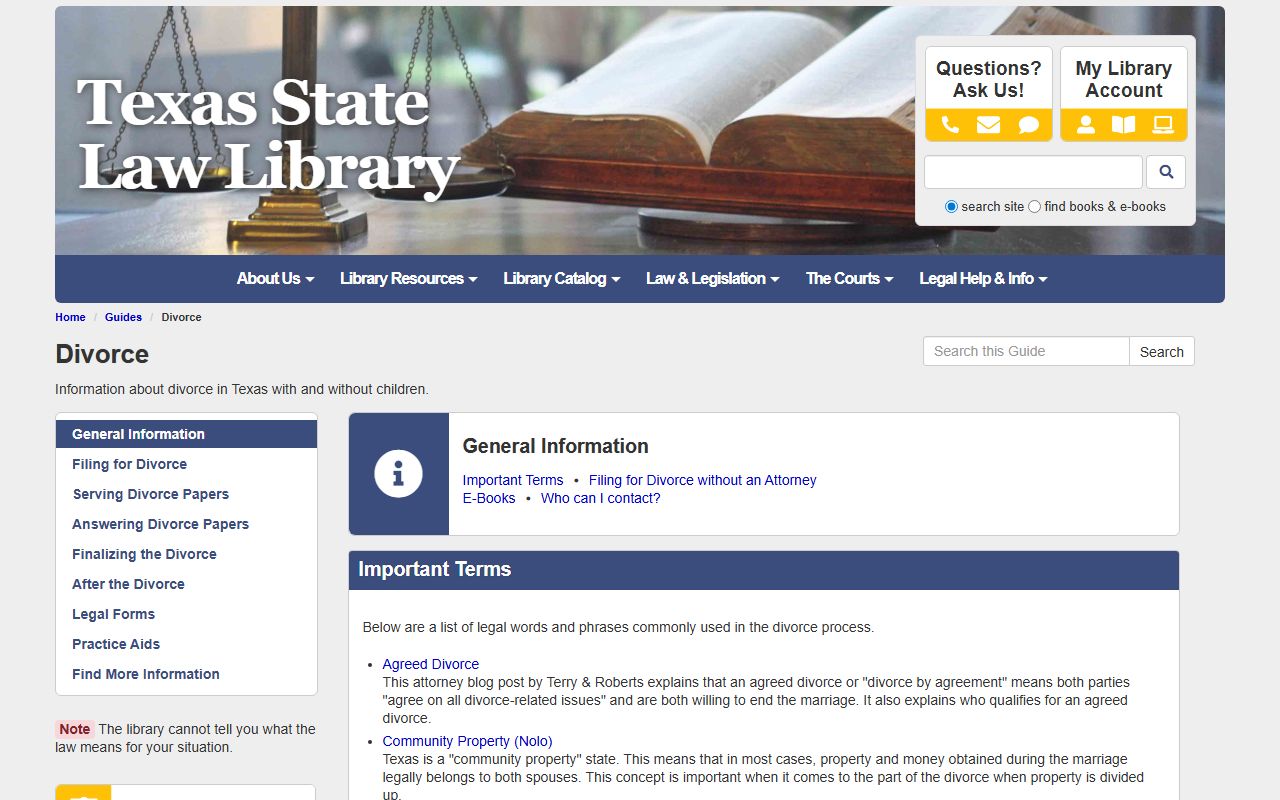
The Texas State Law Library guide walks through each step of the divorce process and links to official forms, court rules, and related statutes.
Several organizations offer legal help with divorce in Texas. Legal Aid programs serve people with low income across the state. Lone Star Legal Aid covers east and southeast Texas. Call (800) 733-8394 to ask about their family law services. Texas RioGrande Legal Aid handles cases in central, south, and west Texas at (888) 988-9996.
The State Bar of Texas runs a lawyer referral service. Call (800) 252-9690 to get connected with a family law attorney in your area. The first consultation fee depends on the attorney. You can also find attorneys through the State Bar's online directory at texasbar.com.
TexasLawHelp at texaslawhelp.org has self-help guides and forms for people who want to handle their own divorce. The Texas Judicial Branch also provides standardized divorce forms through the Texas Courts website. Many courthouses have a self-help desk or law library where staff can point you to the right forms, though they can't give legal advice.
Are Divorce Records Public in Texas
Yes. Court records in Texas are generally public under Texas Government Code Chapter 552, the Texas Public Information Act, as well as the rules governing access to judicial records. You do not have to be one of the parties. You don't need to give a reason for your request. Most of the case file is open to anyone who asks at the District Clerk's office.
Some parts of divorce files have restricted access. Financial documents like tax returns and detailed asset statements may be sealed. Social security numbers and account numbers get redacted from public filings. Records involving minors, including custody evaluations, may also have limited access. A party can ask the court to seal other records if they can show good cause, but this is not common. The judge decides whether sealing is warranted based on privacy concerns and public interest.
Most divorce records in Texas are open to the public. Financial source documents and some child-related reports may have restricted access.
Browse Texas Divorce Records by County
Each of Texas's 254 counties has its own District Clerk that handles divorce cases. Pick a county below to find local contact info and resources for divorce records in that area.
Divorce Records in Major Texas Cities
Residents of major cities file for divorce at the District Court in their county. Pick a city below to find out where to go for divorce records in that area.