
Find Dallas Divorce Decree Records
Dallas divorce decree records are kept at the Dallas County District Clerk's office at 600 Commerce Street in downtown Dallas. If you need to search for a divorce case or get a certified copy of a Final Decree of Divorce filed in Dallas, that office is your starting point. The city of Dallas does not hold divorce records. All divorce filings for Dallas residents go through Dallas County District Court. You can search online through the county's public portal, or visit the courthouse in person during business hours. The portal provides case status, party names, and docket entries for free.
Dallas Overview
Dallas County Handles Dallas Divorces
Dallas is the county seat of Dallas County. All divorce cases filed by Dallas residents go through Dallas County District Court. The District Clerk is the official keeper of those records. The Dallas City Secretary's office is a separate office that manages city council records, city elections, and public information requests for the city. That office does not have any access to divorce case files. The City Secretary will refer you to Dallas County if you contact them about divorce records.
The Dallas County District Clerk's office is located at 600 Commerce Street in downtown Dallas. The main phone number is (214) 653-7421. Office hours are Monday through Friday, 8:00 AM to 4:30 PM. The District Clerk maintains divorce records from 1846 to the present. Older records may be on microfilm and may require more time to retrieve. Public access terminals are available in the office if you want to search records on-site without staff help.
For complete information on the county court system and all available resources, visit the Dallas County divorce records page.
| Office | Dallas County District Clerk |
|---|---|
| Address | 600 Commerce Street Dallas, TX 75202 |
| Phone | (214) 653-7421 |
| Hours | Monday through Friday, 8:00 AM to 4:30 PM |
| Website | dallascounty.org/departments/districtclerk |
Note: The Dallas County District Clerk accepts payment by cash, check, money order, or credit card for copies and search fees.
How to Search Dallas Divorce Records
Dallas County has two online portals for case access. The Tyler Technologies Odyssey portal at portal-txdallas.tylertech.cloud gives you public access to case records around the clock. You can search by party name, case number, attorney name, or date range. Guest access is free. Registered users get additional features like case alerts and saved searches. You can also use dallascal.ci.dallas.tx.us for civil and family case records, which allows you to view docket entries and purchase document images.
The statewide re:SearchTX system is another option that covers Dallas County along with most other Texas counties. It is useful if you are searching across multiple counties at once.
To search for a Dallas divorce decree, you will need the full name of at least one spouse and an approximate filing year. Case numbers include the year and a sequence code. If you have the cause number from a previous court document, use that for the fastest result. Cases from before 1980 may have limited online records and may need to be researched in person. Call (214) 653-7421 for help with historical records.
Mail requests are also accepted. Send a written request with the case information, along with payment and a self-addressed stamped envelope, to the District Clerk at 600 Commerce Street, Dallas, TX 75202.
Dallas Divorce Filing Fees
The Dallas County District Clerk sets divorce filing fees. Filing a no-children divorce costs roughly $350. Cases with children cost a bit more. Fees are paid at the time of filing. Check with the District Clerk for the current schedule since amounts can change.
Copy fees are $1.00 per page for plain copies. Certified copies cost $1.00 per page plus $5.00 per document for certification. Staff-conducted name searches cost $5.00 per name per 10-year period searched. Service of process fees vary by method. Constable service is typically $75 to $100. Private process servers charge their own rates, usually between $50 and $125.
If you cannot afford the filing fees, you can request a fee waiver by filing a Statement of Inability to Afford Payment of Court Costs. This form is on the Texas Courts website. If you receive public assistance or earn below 125% of the federal poverty level, you likely qualify. The court reviews your financial situation and decides whether to waive or reduce fees. Legal aid organizations in Dallas can also help you fill out the form if needed.
Divorce Process for Dallas Residents
Dallas residents follow Texas Family Code requirements when filing for divorce. The law is found in Texas Family Code Chapter 6. Filing happens at Dallas County District Court. Every document you file creates an official public record.
Residency is required before filing. Under Texas Family Code Section 6.301, at least one spouse must have lived in Texas for six months and in Dallas County for at least 90 days before the petition can be filed. If you recently moved to Dallas, you may need to wait to meet the county residency rule.
Texas permits no-fault divorce under Texas Family Code Section 6.001 on the ground of insupportability. You do not need to prove fault. Fault grounds like cruelty, adultery, felony conviction, or abandonment are also available if applicable to your situation.
After filing the petition, the other spouse is served or signs a Waiver of Service. Texas law imposes a 60-day waiting period under Texas Family Code Section 6.702 before a judge can grant the divorce. Agreed cases typically move faster. Contested cases may need mediation or a hearing before the judge signs the Final Decree of Divorce. Standing orders apply to all family law cases in Dallas County from the moment of filing.
Dallas County has standing orders that take effect automatically when a divorce petition is filed, restricting certain actions by both parties during the case.
What Dallas Divorce Case Files Include
A Dallas divorce case file at the District Clerk includes all documents filed with the court throughout the case. The most-requested document is the Final Decree of Divorce, which is the judge-signed order that officially ends the marriage. That decree contains property division terms, spousal support if any, and parenting arrangements if children are involved.
Other documents in the file may include the original petition, citation, answer or waiver of service, temporary orders, financial affidavits, property settlement agreement, parenting plan, and child support order. Most of these are public records. Some may be sealed by court order. Financial records and documents involving minors may be restricted. Adoption records are always sealed. Sealed records require a court order to access. For document images online, the Odyssey portal allows you to purchase PDFs of most filed documents.
Note: Dallas County records prior to 1980 may be available only on microfilm and may take longer to retrieve from the archives.
Dallas Legal Help and Resources
Several organizations in Dallas offer help with divorce cases. Some are free for people with low income. Others offer reduced-rate consultations. These resources can be valuable whether you are filing on your own or looking for an attorney to represent you.
Legal Aid of NorthWest Texas serves Dallas and the surrounding region. They handle family law cases for income-eligible clients. Their intake process determines whether you qualify. TexasLawHelp.org provides self-help guides and official forms for filing divorce without a lawyer. Official court forms are also available at txcourts.gov. The State Law Library divorce guide is a useful starting point for understanding the process.
The State Bar of Texas lawyer referral service at (800) 252-9690 can connect you with a family law attorney for an initial consultation. If child support is part of your case, the Texas Attorney General's Child Support Division can help enforce or establish support orders at no cost.
The Dallas city government website makes clear that divorce records are maintained by Dallas County District Clerk, not the city.
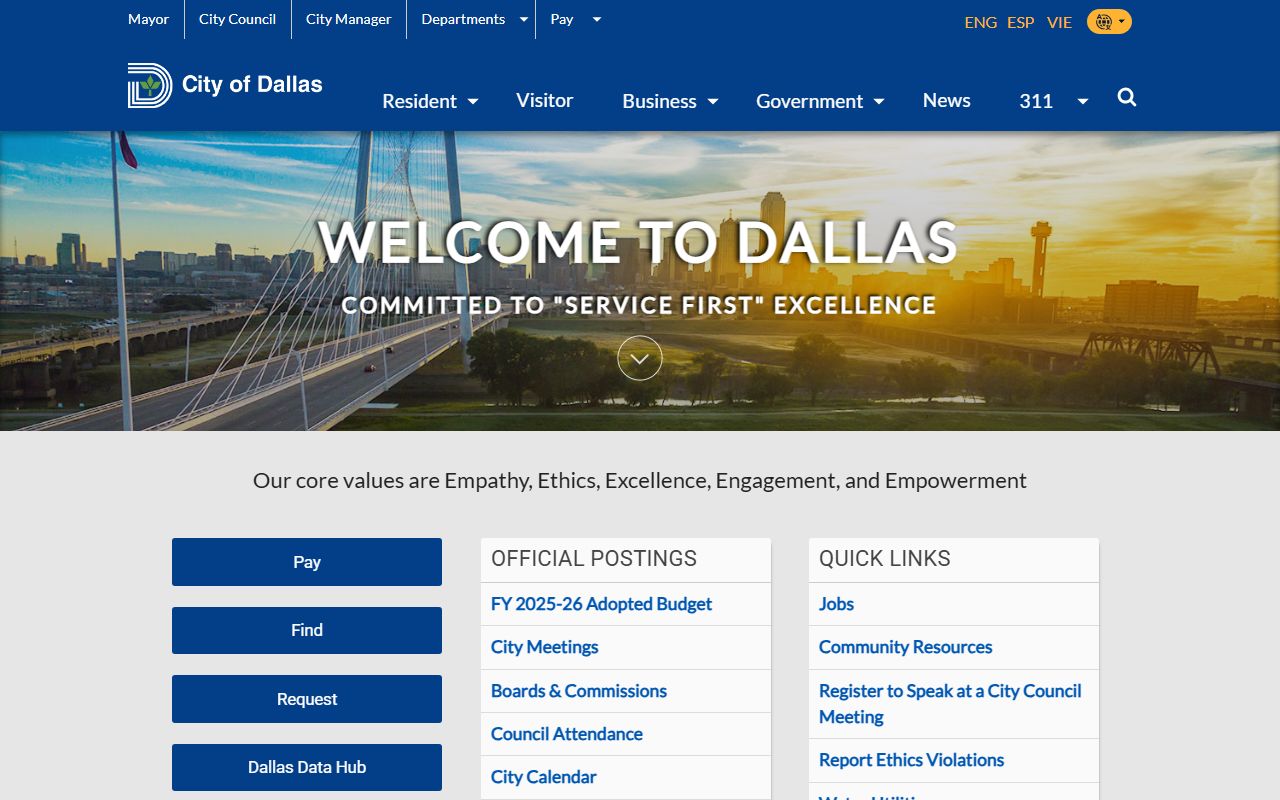
All Dallas divorce decree requests should be directed to the Dallas County District Clerk at 600 Commerce Street.
Dallas County Divorce Records
Dallas is in Dallas County, and all divorce filings go through Dallas County District Court. The county court system serves Dallas and surrounding communities including Irving, Garland, Mesquite, Grand Prairie, and Richardson. For more information on search options, fees, and county court resources, visit the Dallas County divorce records page.
Nearby Texas Cities
Divorce record pages are also available for nearby cities in the Dallas-Fort Worth area and beyond.