
Search Kinney County Divorce Decree Records
Kinney County divorce decree records are kept at the District Clerk's office in Brackettville, the county seat in far South Texas near the Mexican border. Kinney County is a small, rural county with no online case search portal. Anyone who needs to find a divorce case or get a certified copy of a final decree from Kinney County must contact the clerk's office directly by phone, mail, or in person. The 63rd Judicial District Court serves the county and handles all family law cases. This page explains the process step by step.
Kinney County Overview
Kinney County District Clerk
The District Clerk in Brackettville is the official keeper of all court records for Kinney County, including divorce files. The 63rd Judicial District Court hears family law cases for the county, and the clerk maintains all associated documents. Staff can search records by party name or cause number and provide copies to the public during regular business hours.
Kinney County sits in a remote part of southwest Texas. Because of its size and location, the clerk's office handles a smaller volume of cases than metropolitan counties. This can work in your favor when searching for older records, since staff tend to know the files well. Contact the clerk at (830) 563-2521 to ask about a specific case before making the drive to Brackettville.
| Office | Kinney County District Clerk |
|---|---|
| Address | 501 Ann St, Brackettville, TX 78832 |
| Phone | (830) 563-2521 |
| Hours | Monday through Friday, 8:00 AM to 5:00 PM |
| Website | co.kinney.tx.us |
For mail requests, include both party names, the approximate filing year, and the type of copy you need. Send payment by check or money order payable to the Kinney County District Clerk. Call the office to confirm current fees before sending payment.
Accessing Kinney County Divorce Records
Kinney County does not have its own online records portal. The statewide re:SearchTX system may carry some basic case index data for Kinney County, though coverage for small counties can be incomplete. Check that system first, but plan on contacting the clerk directly if you need to confirm a case or order documents.
When calling the clerk's office, give them the full legal names of both parties as they appeared at the time of the divorce, the approximate year of filing, and if possible, the cause number. That information is usually enough for the clerk to locate the case. If the case is recent, it will likely be in active files. Older cases may be in archives but are still accessible.
For a statewide divorce verification without needing the full county file, contact the Texas DSHS Vital Statistics Unit at dshs.texas.gov/vs. They maintain an index of Texas divorces going back to 1968 and can issue a verification letter confirming the divorce occurred. This is often sufficient when you just need to prove the marriage ended.
Divorce Law and Filing in Kinney County
Texas Family Code rules apply uniformly across all 254 counties. Under Texas Family Code section 6.301, at least one spouse must have lived in Texas for six months and in Kinney County for 90 days to file there. If you have not been in the county for 90 days before your petition date, you will need to wait or file elsewhere.
Texas law permits no-fault divorce. The standard ground under Texas Family Code section 6.001 is "insupportability," which means the marriage has broken down due to conflict or discord with no reasonable expectation of reconciliation. You do not need to prove wrongdoing to qualify. Fault grounds like cruelty, adultery, or felony conviction are also in the Family Code and may be used if you choose to pursue them.
A 60-day mandatory waiting period begins when you file the petition, as required by Texas Family Code section 6.702. The court cannot grant the divorce until those 60 days have passed. For agreed cases where both parties have worked out all the terms, the final decree can be signed relatively quickly once the wait ends. Contested cases may take longer depending on the issues involved.
Official court forms for Texas divorces are free at txcourts.gov/rules-forms. Step-by-step guidance is available at texaslawhelp.org.
Fees for Kinney County Divorce Records
Filing a divorce in Kinney County costs approximately $290 for a case without children. Cases with children are a bit more. These are estimates, and fees can change when the Legislature updates statutory court costs. Call the clerk at (830) 563-2521 to confirm the current amount before you show up or mail your check.
Copies of divorce records cost about $1 per page for plain copies. Certified copies are $1 per page plus $5 per document for the certification. Make checks or money orders out to the Kinney County District Clerk. If you need multiple documents certified, each carries its own $5 fee.
Fee waivers are available for people who cannot afford court costs. File the Statement of Inability to Afford Payment of Court Costs with your petition. The form is at txcourts.gov/rules-forms or at the courthouse. The judge reviews your finances and decides whether to waive the fees. Legal aid organizations may also be able to assist qualifying residents.
What Kinney County Divorce Records Include
A Kinney County divorce file contains all court documents from the filing date through any post-decree orders. The file starts with the Original Petition for Divorce, which names both parties, states the grounds, and tells the court what the petitioner wants. The Citation shows how the other spouse was notified. A Waiver of Service goes in the file if the respondent agreed to skip formal service.
The Final Decree of Divorce is the judge's signed order that ends the marriage. It covers property division under Texas Family Code Chapter 7, conservatorship and possession for children, child support under Texas Family Code Chapter 154, and any spousal maintenance the court orders. This document is what you need for name changes, remarriage, and other legal steps after the divorce.
Other items in the file may include temporary orders, income withholding orders, mediated settlement agreements, and Qualified Domestic Relations Orders for retirement accounts. Financial disclosures submitted during the case may be sealed by court order. Ask the clerk what is publicly available for your specific case.
Legal Help in Kinney County
Lone Star Legal Aid serves South Texas including the Brackettville area and can provide free legal help to qualifying low-income residents. Call (800) 733-8394 or go to lonestarlegal.org to check eligibility. The State Bar of Texas referral line at (800) 252-9690 and the attorney search at texasbar.com can help you find a licensed attorney in the area.
Free self-help guides and official Texas court forms are available at texaslawhelp.org and txcourts.gov/rules-forms. The Texas State Law Library's divorce guide at guides.sll.texas.gov/divorce is a comprehensive free resource that walks through the entire divorce process in plain language.
The Texas DSHS Vital Statistics Unit provides statewide divorce verification letters and maintains a divorce index going back to 1968.
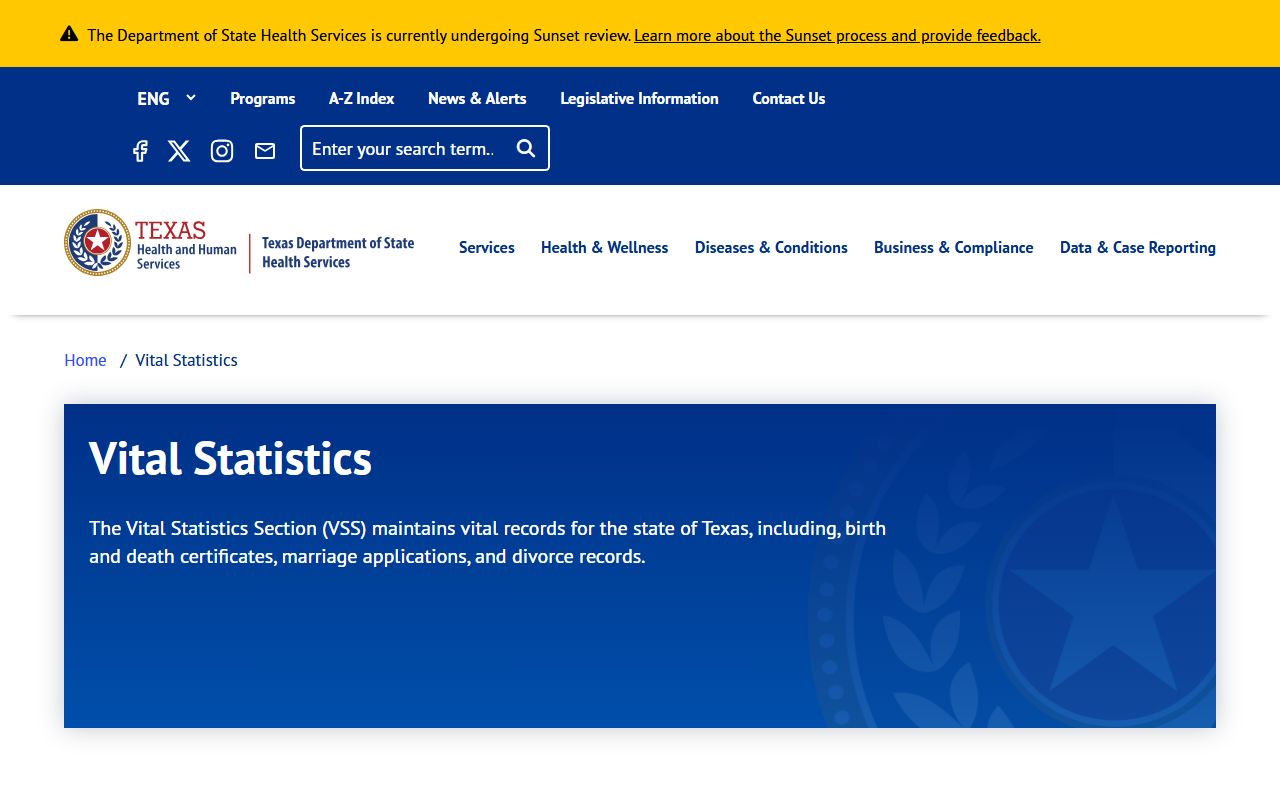
DSHS can issue a verification letter confirming a Texas divorce occurred, which is useful when you need proof of the divorce without ordering the full certified decree from the county.
Cities in Kinney County
Brackettville is the county seat and largest community in Kinney County. No cities in Kinney County meet the population threshold for a dedicated city page on this site. All divorce cases filed by county residents go through the District Clerk in Brackettville.
Nearby Counties
Kinney County borders Val Verde, Edwards, Uvalde, and Maverick counties. File for divorce in the county where you have lived for at least 90 days immediately before the filing date.
Val Verde County | Edwards County | Uvalde County | Maverick County