
Willacy County Divorce Decree Records
Willacy County divorce decree records are maintained by the District Clerk at the Willacy County Courthouse in Raymondville, Texas. The District Clerk keeps all divorce filings, final decrees, and related court documents. Willacy County is in the Rio Grande Valley in deep South Texas. If you need to search for a divorce case, get a certified copy of a decree, or confirm whether a divorce is on file, the Willacy County District Clerk's office is where you start.
Willacy County Overview
Willacy County District Clerk
The Willacy County District Clerk's office is located at the courthouse in Raymondville and serves as the official custodian of all civil and family law case records. This includes every divorce decree filed in the county. The office handles the 197th Judicial District Court and processes all family law matters including divorce, custody, adoption, and child support cases filed in the county.
Willacy County is a small, rural South Texas county. The court system is compact, and the District Clerk's office is the central resource for most legal records. Online case access is limited for this county. Most requests require a phone call, mail request, or an in-person visit to Raymondville. Staff can be reached at (956) 689-2535 during courthouse business hours.
| Office | Willacy County District Clerk |
|---|---|
| Location | Willacy County Courthouse, Raymondville, TX |
| Phone | (956) 689-2535 |
| Website | co.willacy.tx.us |
Note: Willacy County has limited online records access. Call ahead before visiting or mailing a records request to confirm procedures and payment options.
Search Willacy County Divorce Records
For Willacy County divorce decree records, the most reliable path is to contact the District Clerk's office directly. Call (956) 689-2535 to ask about a case and find out what you need to bring or send. You can also check the statewide re:SearchTX portal to see if any Willacy County case data is available online. Register for a free account and search by name or cause number.
For in-person searches, go to the Willacy County Courthouse in Raymondville. Bring a valid photo ID. If you have the cause number, the search will go faster. If you only have names and an approximate year, staff will look up the case. Certified copies must be paid for at the time of request. Confirm payment methods by calling ahead.
Mail requests are accepted. Write to the Willacy County District Clerk and include the names of both parties, the approximate year of the divorce, and the cause number if available. Include a self-addressed stamped envelope and payment for the fees. The clerk will confirm what is available and send you the documents or a fee statement.
Willacy County Divorce Decree Fees
Willacy County uses standard Texas fee rules for copies of court records. Plain copies of divorce decrees cost $1.00 per page. Certified copies cost $1.00 per page plus a $5.00 certification fee per document. A name search without a cause number may carry an additional fee. Filing a new divorce case carries base fees set by the District Clerk, generally in the $262 to $350 range for civil and family law cases.
Contact the Willacy County District Clerk at (956) 689-2535 to confirm the exact filing fees before you file. Fees can change at the beginning of each year. Additional costs may include service of process fees, citation fees, and required form filings like the Bureau of Vital Statistics form for every Texas divorce.
If you cannot pay, you can file a Statement of Inability to Afford Payment of Court Costs. Forms are available at txcourts.gov/rules-forms. The court decides whether to waive your fees based on your financial situation.
Filing for Divorce in Willacy County
Texas law governs all divorce cases in Willacy County. Under Texas Family Code Section 6.301, at least one spouse must have lived in Texas for six months and in Willacy County for 90 days before filing. The petitioner files the Original Petition for Divorce with the District Clerk in Raymondville, pays the filing fee, and the case is assigned a cause number.
Texas allows no-fault divorce based on insupportability under Section 6.001. This means the marriage has become unsustainable due to conflict or discord with no real chance of working things out. Fault grounds like cruelty, adultery, abandonment, and felony conviction are also available if you can prove them. Willacy County cases, like most in Texas, typically proceed on no-fault grounds.
After the petition is filed, there is a mandatory 60-day waiting period under Section 6.702. The judge cannot finalize the divorce until after that time. Once the 60 days are up and both parties agree, the judge can sign the Final Decree of Divorce. If there are disputes, the case may go to mediation or trial. Temporary orders may cover property and children during the case.
Property is divided under Texas Family Code Chapter 7. The court splits community property and debts in a just and right manner. Each spouse keeps their separate property, which is what they owned before marriage or received as a gift or inheritance during it.
Contents of Willacy County Divorce Decrees
The Final Decree of Divorce is the official court order ending the marriage in Willacy County. It lists both parties' names, states the grounds, and sets out all the terms. Property and debt division is spelled out. For cases with children, the decree includes conservatorship arrangements, a possession schedule, and child support. If spousal maintenance was ordered under Chapter 8, the amount and duration appear in the decree as well.
The case file also holds the original petition, any financial disclosures, hearing records, and the Bureau of Vital Statistics form required for every Texas divorce. Most Willacy County divorce records are public. Records involving children and some financial exhibits may have restricted access under state law. For quick verification, the Texas DSHS Vital Statistics office has a statewide divorce index from 1968 forward. Certified copies of the actual decree must come from Willacy County.
Legal Help for Willacy County Divorce Cases
TexasLawHelp.org has free guides available in English and Spanish on divorce, custody, and support. This is a good resource for Willacy County residents who speak Spanish as their primary language. The Texas State Law Library at guides.sll.texas.gov/divorce also has a step-by-step guide to the Texas divorce process.
Official court forms are at txcourts.gov/rules-forms. The State Bar of Texas refers people to family law attorneys at (800) 252-9690 or online at texasbar.com. Legal aid organizations serving the Rio Grande Valley may be able to assist low-income residents with family law cases in Willacy County. After the decree, child support matters go to the Texas Attorney General's Child Support Division.
The Texas Department of State Health Services Vital Statistics unit maintains a divorce index that covers Texas divorces from 1968 to the present, including Willacy County cases.
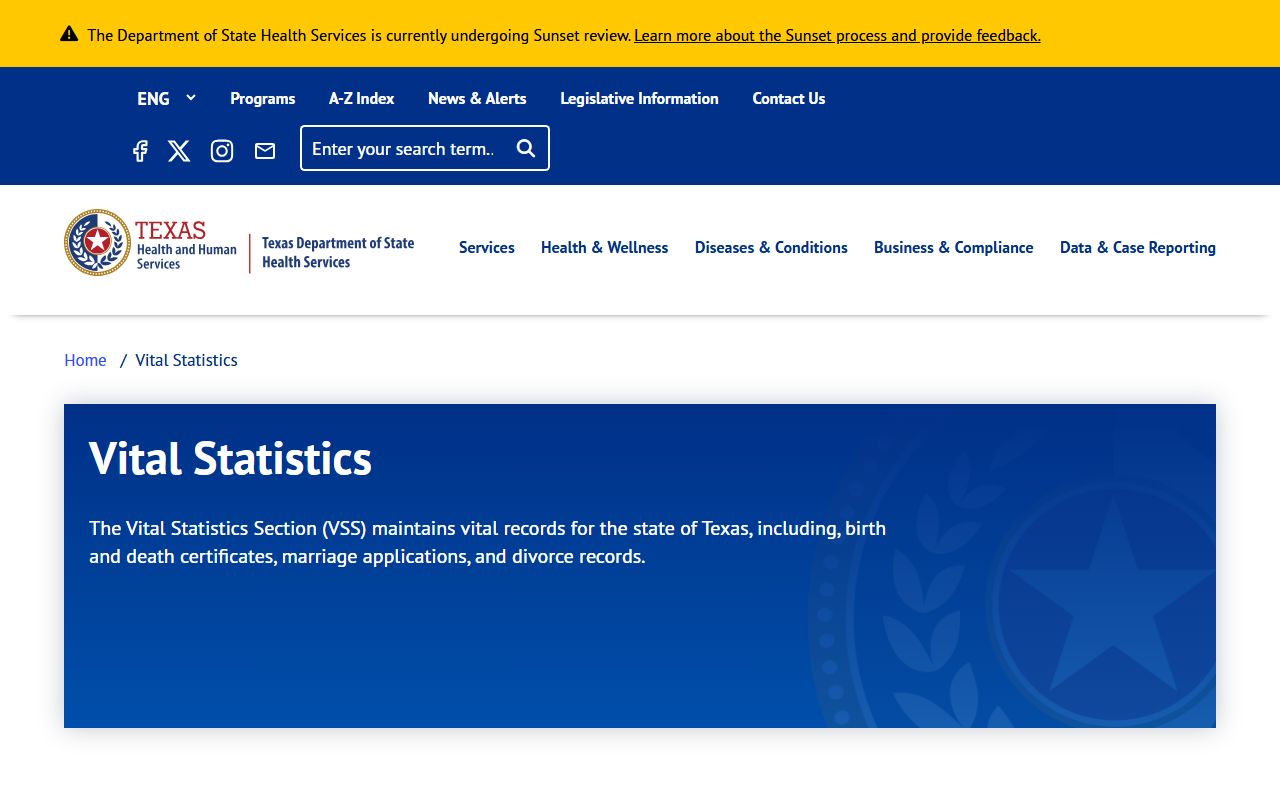
The DSHS index is useful for quick verification, but for a certified copy of the actual Willacy County decree, you must contact the District Clerk in Raymondville.
Cities in Willacy County
Willacy County includes Raymondville and several smaller communities. No cities in Willacy County meet the population threshold for a dedicated city page. All divorce filings in the county go through the District Court in Raymondville.
Communities in Willacy County include Raymondville, Lyford, San Perlita, and Port Mansfield. All divorce cases for these areas are handled by the District Clerk at the Willacy County Courthouse.
Nearby Counties
These counties border Willacy County in the Rio Grande Valley. File in the county where at least one spouse has lived for 90 days before the filing date.