
Jim Hogg County Divorce Decree Records
Jim Hogg County divorce decree records are kept by the District Clerk in Hebbronville, the county seat in far South Texas. If you need to search for a divorce case filed in Jim Hogg County, the clerk's office is your main source. Cases go through the district court, and the clerk holds the original filings, final decrees, and all related documents. Access to these records is available in person at the courthouse during normal business hours. The county does not offer a full online search portal, so most requests are handled in person or by mail. This page walks you through how to find records and what to bring.
Jim Hogg County Overview
Jim Hogg County District Clerk
The District Clerk's office in Jim Hogg County handles all divorce filings for the 229th Judicial District. This is a smaller county, so the office is also compact, but the staff can help you look up cases by name or cause number. All divorce records are stored here from the time of the first filing through the final decree and any post-decree orders.
In-person visits are the most reliable way to get records in Jim Hogg County. The courthouse is located in Hebbronville at the county seat. You can ask to view a case file or request copies. Bring a photo ID and, if you have it, the cause number from your case. That speeds things up quite a bit. If you're not sure of the cause number, the clerk can search by party name.
| Office | Jim Hogg County District Clerk |
|---|---|
| Address | 102 E Tilley Ave, Hebbronville, TX 78361 |
| Phone | (361) 527-4031 |
| Hours | Monday through Friday, 8:00 AM to 5:00 PM |
| Website | co.jim-hogg.tx.us |
Mail requests are also accepted. Send a written request with the names of both parties, approximate filing year, and a money order or check for the copy fees. The clerk will respond with what is available. Allow several weeks for mail requests, as staff is limited and volume can vary.
How to Find Jim Hogg County Divorce Records
Jim Hogg County does not have its own online case search system. The statewide re:SearchTX portal may have some case index information, but document images and certified copies require a visit or written request to the clerk's office. It's worth checking re:SearchTX first to confirm the case number before contacting the clerk.
When you contact the clerk's office, be ready with:
- Full legal name of one or both spouses at the time of filing
- Approximate year the divorce was filed
- Case or cause number if you have it
- The type of document you need (certified copy vs. plain copy)
Certified copies cost more than plain copies but are needed for legal purposes like name changes, remarriage, or court proceedings. A plain copy is fine for personal reference. Ask the clerk which fee applies to your request. Payment is usually by cash, check, or money order at the courthouse window.
The Texas State Law Library also has guides for people searching divorce records without a lawyer. Their site at guides.sll.texas.gov/divorce covers the process from start to finish and explains what documents to expect in a divorce file.
Filing for Divorce in Jim Hogg County
To file for divorce in Jim Hogg County, at least one spouse must have lived in Texas for six months and in Jim Hogg County for at least 90 days. That requirement is spelled out in Texas Family Code section 6.301. If you do not meet the 90-day county rule, you can still file in another county where you have lived for that period.
Texas is a no-fault state, which means you do not have to prove wrongdoing to get a divorce. The most common ground used is "insupportability" under Texas Family Code section 6.001. That just means the marriage has broken down with no reasonable hope of fixing it. Fault grounds like cruelty or adultery are available but less common and harder to prove.
After filing, there is a mandatory waiting period. Under Texas Family Code section 6.702, the court cannot grant a divorce until at least 60 days after the original petition is filed. Exceptions apply in cases with a family violence protective order. The judge signs the Final Decree of Divorce once the waiting period passes and all terms are agreed upon or decided at trial.
Forms for filing divorce in Texas are available free at txcourts.gov/rules-forms and through texaslawhelp.org, which also has step-by-step instructions.
Fees for Jim Hogg County Divorce Records
Filing fees in Jim Hogg County are set by the District Clerk and approved by the court. A basic divorce without children typically costs around $300 to $325 to file. Cases involving children run slightly higher due to additional required filings. These amounts include base court costs and statutory fees but can change, so always confirm the current schedule with the clerk before you file.
For copies of existing divorce records:
- Plain copies: typically $1 per page
- Certified copies: $1 per page plus a $5 certification fee per document
- Name search by clerk: small search fee may apply
If you cannot afford the filing fee, you can ask the court to waive costs. File a Statement of Inability to Afford Payment of Court Costs under Texas Rule of Civil Procedure 145. The form is available at the courthouse or at txcourts.gov. The judge reviews your financial situation and decides whether to grant a waiver.
Note: Copy fees and filing fees change over time. Call the Jim Hogg County District Clerk at (361) 527-4031 to confirm current costs before you submit your request or payment.
What Jim Hogg County Divorce Records Include
A divorce file in Jim Hogg County contains all the documents filed during the case. The first paper in the file is the Original Petition for Divorce. That document names the parties, states the grounds, and identifies what the petitioner is asking the court to order. After that, the file grows as the case moves forward.
The Final Decree of Divorce is the most important document in the file. It is the court order signed by the judge that ends the marriage. The decree spells out how property is divided, who gets conservatorship of any children, what the possession schedule looks like, and whether any support is ordered. Under Texas Family Code Chapter 7, the court divides marital property in a way it finds just and right based on the facts of the case.
Other documents often found in the file include a Waiver of Service if the other spouse did not have to be formally served, a Final Order on child support, and any Qualified Domestic Relations Orders for dividing retirement accounts. Child support guidelines are set by Texas Family Code Chapter 154.
Most divorce records are public. You do not have to be a party to the case to request copies. Some sensitive financial documents attached to a case may be sealed, and records involving minors may have restricted portions. Ask the clerk what is available for public access in your specific case.
Legal Help for Jim Hogg County Residents
Jim Hogg County residents who need help with a divorce can contact South Texas legal aid organizations. Lone Star Legal Aid serves South Texas and offers free legal help to qualifying low-income residents. They handle family law matters including divorce, child custody, and support. Call (800) 733-8394 or visit lonestarlegal.org to learn more.
The State Bar of Texas has a lawyer referral service that can connect you with a licensed attorney. Call (800) 252-9690 or search at texasbar.com. For self-help guides and all official court forms, go to texaslawhelp.org. That site has plain-language instructions for uncontested divorces that you can complete without a lawyer.
The Texas DSHS Vital Statistics Unit keeps a statewide index of divorce records dating back to 1968. They do not issue certified decree copies, but they can issue a verification letter. Contact them at dshs.texas.gov/vs or call (512) 776-7111. The verification letter can help you confirm a divorce occurred in Texas without getting a full certified copy from the county.
The Texas Judicial Branch also maintains information about courts across the state. Their site lists judicial district assignments for each county and links to court resources.
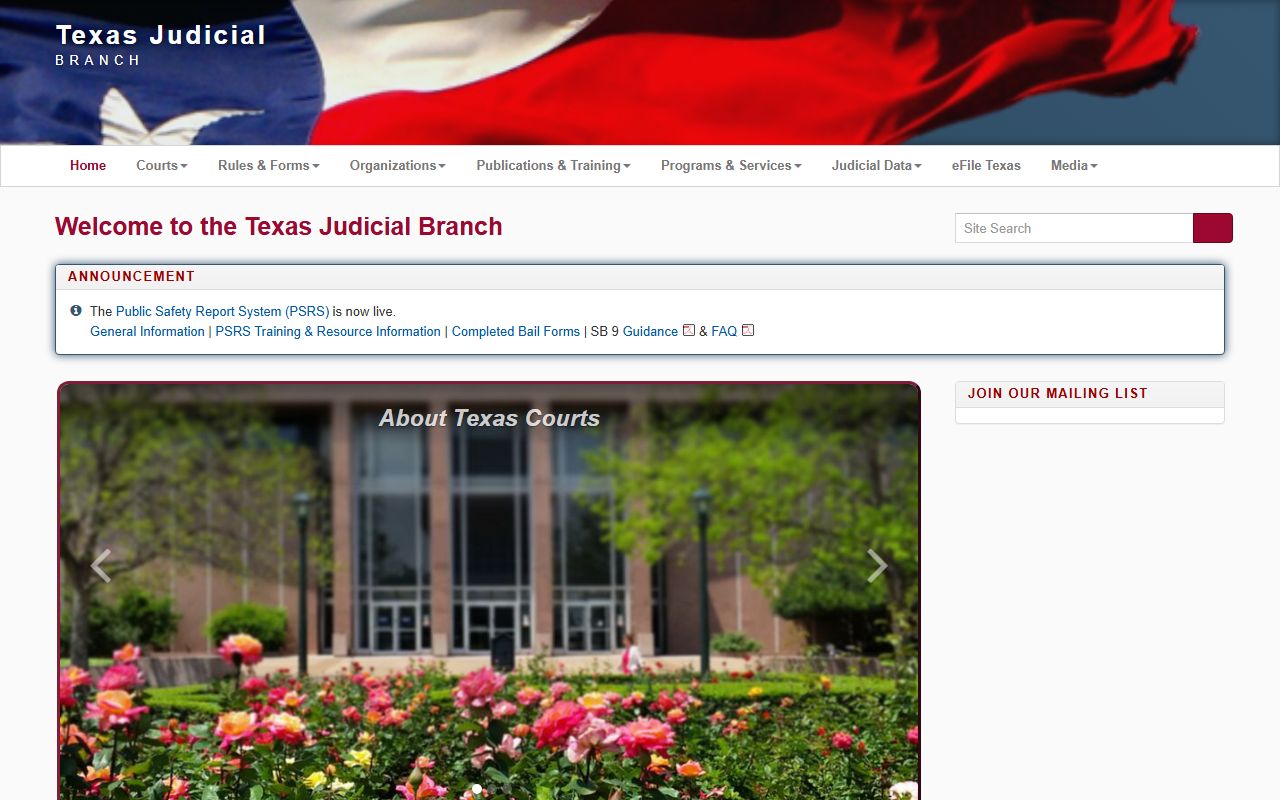
The Texas Judicial Branch website provides court contact information and filing resources for all 254 counties, including Jim Hogg.
Cities in Jim Hogg County
Hebbronville is the county seat and largest community in Jim Hogg County. All divorce cases for residents in the county are filed at the District Clerk's office in Hebbronville. No cities in Jim Hogg County meet the population threshold for a dedicated city page.
Nearby Counties
Jim Hogg County is bordered by Webb, Starr, Brooks, and Duval counties. If you are not sure which county to file in, check where you have lived for the past 90 days. That is the county where you file under Texas law.
Webb County | Starr County | Brooks County | Duval County | Zapata County