
Search Hunt County Divorce Decrees
Hunt County divorce decrees are filed with the District Clerk in Greenville, Texas. The office maintains all civil court records for this Dallas-area county, including divorce filings and final decrees. You can search for Hunt County divorce records online through state court systems, by phone, or in person at the courthouse. The District Clerk provides certified copies of final decrees for legal and personal use. Hunt County has online case access, making it easier to check case status without visiting in person.
Hunt County Overview
Hunt County District Clerk
The Hunt County District Clerk is in Greenville and maintains all civil court records for the county. The office handles divorce filings, stores case files, and provides copies of decrees and related documents. Hunt County is northeast of Dallas and has seen growth as part of the DFW metro area's expansion. The court system here handles a significant number of family law cases each year.
Hunt County has two district courts that handle civil and family matters. The District Clerk keeps records for both. Online access is available, making it possible to check case status without calling or visiting. For certified copies of a final decree, you still need to contact the clerk directly. The office at (903) 408-4172 can assist with records requests and copy fees.
| Office | Hunt County District Clerk |
|---|---|
| Address | Hunt County Courthouse 2507 Lee St., Suite 202 Greenville, TX 75401 |
| Phone | (903) 408-4172 |
| Hours | Monday through Friday, 8:00 AM to 5:00 PM |
| Website | co.hunt.tx.us |
How to Search Hunt County Divorce Records
Hunt County offers online access to court records. You can use the statewide re:SearchTX portal to search Hunt County divorce cases by party name. The portal shows basic case information, docket entries, and case status. This is a convenient way to confirm whether a case exists and get the cause number for further research.
The county website at co.hunt.tx.us may also have links to online court records tools. Check there for the most current options. For full access to documents in the case file, or to get certified copies of the decree, you will need to contact the District Clerk directly at (903) 408-4172 or visit the courthouse in Greenville.
In-person visits allow you to view the full case file. Bring a photo ID and the full legal name of at least one party. The year the case was filed is helpful if you do not have a cause number. Certified copies of the Final Decree of Divorce carry the clerk's official stamp and are needed for legal purposes like name changes or proving prior marital status to a government agency.
Note: For recent cases, the online portal is the fastest way to confirm a case exists. For certified copies, a direct request to the clerk is always required.
Divorce Filing Process in Hunt County
To file for divorce in Hunt County, at least one spouse must have lived in Texas for six months and in Hunt County for at least 90 days. This residency rule is in Texas Family Code § 6.301. The Original Petition for Divorce is filed at the District Clerk's office in Greenville.
Texas no-fault divorce is available under Texas Family Code § 6.001. The ground is insupportability, which means the marriage has broken down due to conflict and there is no reasonable hope of reconciliation. Neither spouse has to prove the other did anything wrong. This is the most widely used divorce ground in Texas, including Hunt County. Fault grounds like cruelty and adultery are available but used less often.
A 60-day waiting period runs from the date the petition is filed, per Texas Family Code § 6.702. The final decree cannot be signed before that period ends. If both spouses agree on all terms, the divorce can be finalized quickly after the 60 days pass. Contested cases involving property disputes, child custody, or support take longer and may require hearings or mediation.
Texas community property rules apply to property division under Texas Family Code Chapter 7. Marital property is divided in a manner the court finds just and right. Separate property, including assets owned before the marriage and inherited property kept separate, is not divided between the spouses.
Hunt County Divorce Decree Contents
The Final Decree of Divorce is the primary document that ends a marriage and sets all the terms. It names both spouses, confirms when the marriage ended, and details how property and debts are divided. Spousal maintenance, if ordered, is included. When children are involved, the decree sets out conservatorship terms, a possession schedule, and child support amounts under Texas Family Code Chapter 154.
The full case file at the District Clerk contains the original petition, proof of service, any temporary orders entered during the case, financial disclosures, and the final signed decree. Most records in the file are public. Some financial exhibits may be sealed. Contact the clerk to ask about a specific file before visiting. The clerk can tell you what is in the file and what is available for copying.
The Texas Courts eFile system allows electronic filing for Hunt County divorces and other civil matters. Attorneys and some self-represented parties may file documents online through this system.
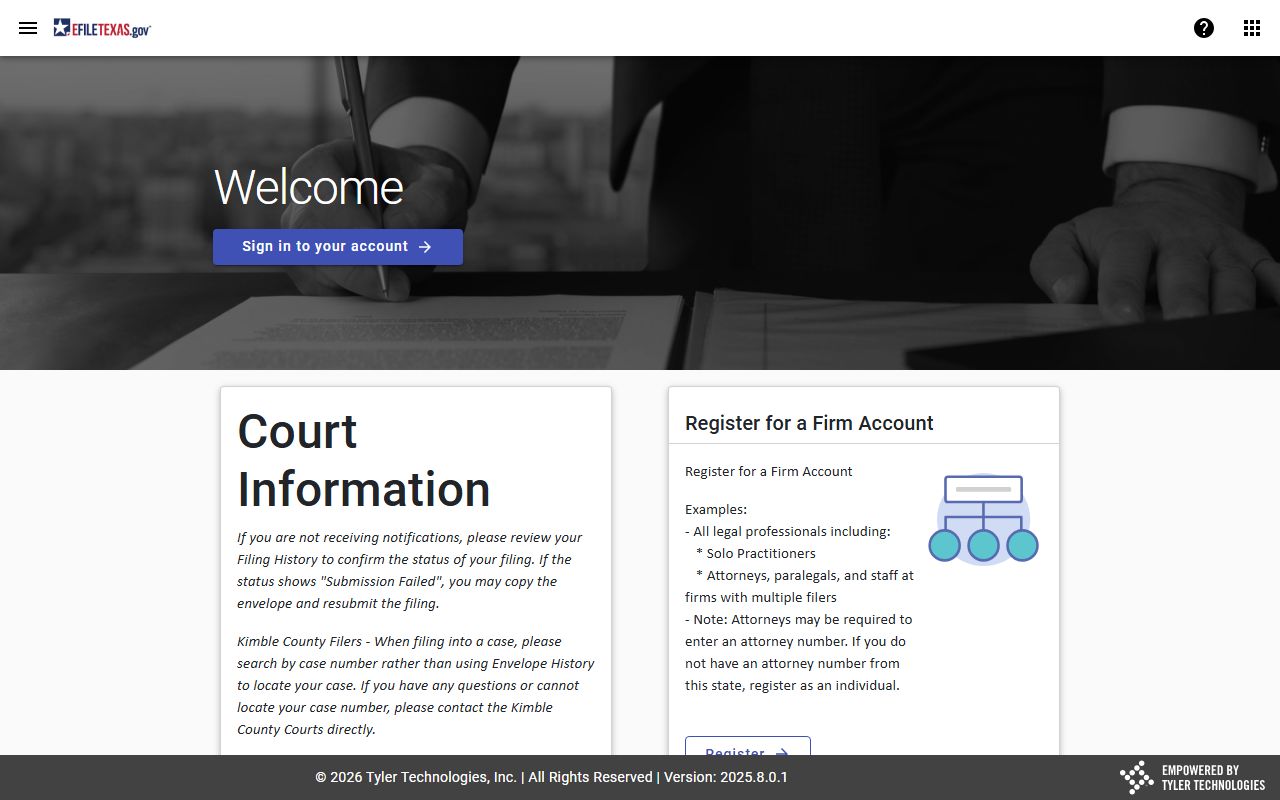
Even when documents are filed electronically, the District Clerk in Greenville remains the official records keeper for all Hunt County divorce cases.
Legal Help in Hunt County
Hunt County residents who need an attorney for a divorce can use the State Bar of Texas lawyer referral service to find a licensed family law attorney in the Greenville or Dallas-area. The State Bar can be reached at (800) 252-9690.
TexasLawHelp.org has free self-help guides and all required forms for Texas divorce cases. For agreed divorces with no contested issues, many people use these resources to handle the case without an attorney. Official court forms are also posted at txcourts.gov. If you have a low income, ask the District Clerk about the Statement of Inability to Afford Payment of Court Costs to request a fee waiver.
Cities in Hunt County
Hunt County includes Greenville, Quinlan, Commerce, and other growing communities northeast of Dallas. No city in Hunt County currently meets the 100,000-population threshold for a separate city page on this site. All divorce cases for Hunt County residents are filed with the District Court in Greenville.
Nearby Counties
Hunt County is northeast of Dallas. Your home address determines where you file for divorce. You must file in the county where you have lived for the past 90 days.
Neighboring counties include Collin County, Rockwall County, Kaufman County, Van Zandt County, Rains County, Delta County, Lamar County, and Fannin County.