
Comanche County Divorce Decree Search
Comanche County divorce decrees are filed with the District Clerk in the city of Comanche, the county seat. This office keeps all family law records including divorce, custody, and support cases for the county. Comanche County is a small rural county in Central Texas. Online access to records is limited, so people searching for a divorce decree often need to contact the clerk directly by phone or visit the courthouse in person. The clerk can search case files and provide copies for a set fee.
Comanche County Overview
Comanche County District Clerk
The District Clerk in Comanche is responsible for all court records in the county, including every divorce case filed in the district court. This office receives and files petitions, maintains the docket, stores case files, and provides copies to those who request them. The clerk's staff are available during normal business hours to assist with records requests.
Comanche County has one district court that handles civil and family law cases. All divorce filings go through this court and are managed by the District Clerk. Staff can search the case index by party name or cause number and let you know what documents are in the file and what the copy fees are.
| Office | Comanche County District Clerk |
|---|---|
| Address | Comanche County Courthouse Comanche, TX 76442 |
| Phone | 325-356-2345 |
| Hours | Monday through Friday, 8:00 AM to 5:00 PM |
| Website | co.comanche.tx.us |
How to Look Up Comanche County Divorce Records
Comanche County has limited online case access. The best approach is to call the District Clerk at 325-356-2345. Have the full names of both parties and the approximate filing year ready when you call. The clerk can search the index and tell you if the record exists, what documents are in the file, and what the copy fees are. This is often the quickest path to getting the information you need.
You can also check the statewide re:SearchTX portal to see if Comanche County case data is included there. Results for smaller counties may be incomplete, but it is worth a quick check before making a phone call. If you find the case there, you may be able to see basic case details like party names and case status.
For in-person visits, go to the courthouse in Comanche during regular business hours. Staff can pull case files and make copies on the spot. Bring a photo ID and cash or a check to cover copy fees. For mail requests, write to the District Clerk at the Comanche County Courthouse, Comanche, TX 76442. Include the names of both parties, the filing year or case number, and your contact information. Include a self-addressed stamped envelope.
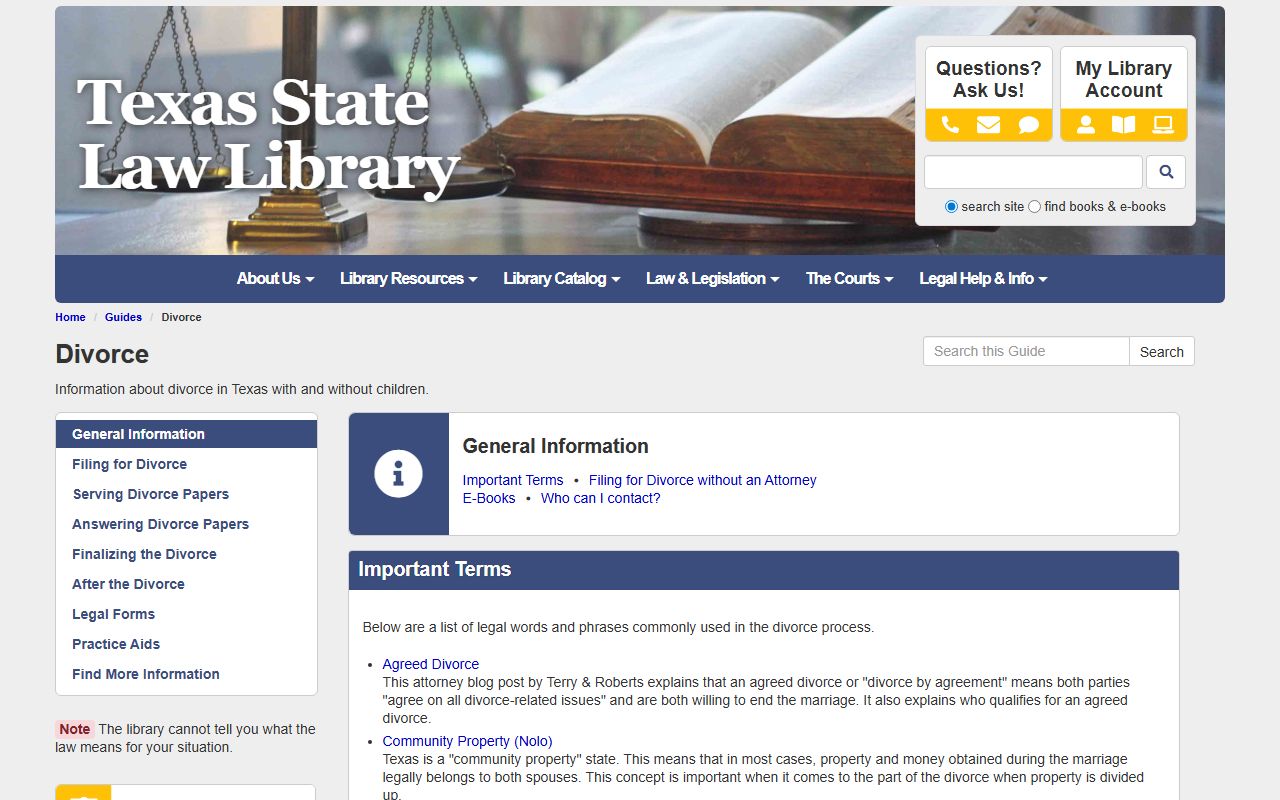
The Texas State Law Library provides guidance and research tools for anyone looking up divorce records or handling a divorce case in Texas, including in small counties like Comanche.
Filing for Divorce in Comanche County
The process for filing a divorce in Comanche County follows Texas state law, the same rules that apply in every Texas county. The first requirement is residency. Under Texas Family Code section 6.301, one spouse must have lived in Texas for at least six months and in Comanche County for at least 90 days before filing. This is a hard rule. Filing before meeting this requirement can result in the case being dismissed.
Texas allows divorce without proving fault. The no-fault ground is insupportability under Texas Family Code section 6.001. You just have to show the marriage is broken beyond repair. Most divorces in Texas and in Comanche County use this ground. Fault-based grounds like cruelty, adultery, or abandonment are also available but require more evidence and are used less often.
After the petition is filed, there is a mandatory 60-day waiting period under Texas Family Code section 6.702. The court cannot grant the divorce until this period ends. Even if both spouses sign an agreed decree the same week you file, the judge cannot sign it until 60 days have passed from the filing date. Family violence situations may qualify for an exception.
Property Division: Texas is a community property state. Under Texas Family Code Chapter 7, the court divides marital assets in a just and right manner. Both spouses should know what property they own before the final hearing.
What Comanche County Divorce Records Include
A divorce decree from Comanche County is the signed court order that ends a marriage. The Final Decree of Divorce is the central document in any divorce case. It sets out all the terms the judge ordered or that both parties agreed to, including property and debt division, conservatorship of children, a possession schedule, child support, and any spousal maintenance. This is usually the document you need for changing your name or proving you are divorced.
The full case file held by the District Clerk also includes the Original Petition for Divorce, any service of process documents, motions, interim orders, and financial disclosures. If children are involved, the file includes parenting plan details and child support calculations under Texas Family Code Chapter 154 guidelines. All of this is part of the permanent court record stored in Comanche.
Most Comanche County divorce records are public. You do not need to be a party to the case to ask for copies. Copy fees apply. Records sealed by court order, adoption records, and certain mental health records are restricted. Ask the clerk if you are not sure whether a specific document is available to you.
Getting Legal Help in Comanche County
Legal resources are available to people in Comanche County who need help with divorce cases. TexasLawHelp.org has free guides and court forms that explain every step of the Texas divorce process in plain language. The site is run by the State Bar of Texas and is designed for people who need to handle their own case. It covers topics from filing the petition to getting the final decree approved.
If you want to hire an attorney, the State Bar of Texas has a lawyer referral service at texasbar.com. You can search for family law attorneys who work in Central Texas. Legal aid organizations serving the region may provide free help to people who meet income guidelines. Court forms are available at txcourts.gov/rules-forms and at the courthouse in Comanche.
Note: The District Clerk's staff in Comanche can tell you what forms to file and what fees are due, but they are not allowed to give legal advice or recommend an attorney.
Cities in Comanche County
Comanche County is a rural county in Central Texas. The city of Comanche is the county seat and main community. No cities in Comanche County meet the population threshold for a dedicated page. All divorce filings from the county are handled by the District Clerk in Comanche.
Nearby Counties
Comanche County sits in Central Texas and borders several other counties. Nearby counties include Eastland County, Erath County, Hamilton County, Mills County, Brown County, and Coleman County. Each has its own District Clerk office. File in the county where you meet the 90-day residency requirement.