
Calhoun County Divorce Decree Records
Calhoun County divorce decree records are kept at the District Clerk's office in Port Lavaca, Texas. The District Clerk is the official holder of all family law case files for the county, including divorce petitions, judgments, and final decrees. Calhoun County is located along the Texas Gulf Coast, and divorce cases here go through the district court in Port Lavaca. You can contact the clerk's office directly, use the statewide re:SearchTX system, or visit the courthouse to access divorce records.
Calhoun County Overview
Calhoun County District Clerk
The Calhoun County District Clerk maintains all divorce decree records for the county. Divorce cases in Calhoun County are handled by the 135th Judicial District Court. The clerk's office keeps case files, processes new filings, and responds to requests for certified copies of final decrees. Staff can search by party name or cause number and tell you what documents are in a given case file.
The courthouse is in Port Lavaca, a Gulf Coast community that serves as the center of county government for Calhoun County. The clerk's office handles records requests from both current residents and people who have moved away and need copies of past divorce decrees. If you cannot visit in person, written mail requests are accepted. Include the names of both parties, the approximate year of filing, and payment for the applicable copy fees.
| Office | Calhoun County District Clerk |
|---|---|
| Address | 211 S. Ann St., Suite 104 Port Lavaca, TX 77979 |
| Phone | (361) 553-4611 |
| Hours | Monday through Friday, 8:00 AM to 5:00 PM |
| Website | co.calhoun.tx.us |
Search Calhoun County Divorce Decrees
Finding a divorce decree in Calhoun County can be done online or in person. The statewide re:SearchTX portal is the best free online tool. It covers Calhoun County district court cases and lets you search by party name or cause number. You can see docket entries, filing dates, and case status from anywhere without going to Port Lavaca.
Calhoun County has limited local online search tools, so for full document access you need to contact the District Clerk. Call (361) 553-4611 during regular hours. Have both parties' names and the year of filing ready. The clerk can tell you if a case exists in Calhoun County, what documents are in the file, and what it will cost to get certified copies. Payment is made at the time of the request or included with a mail request.
Visiting the courthouse in person is the fastest way to access the physical file and get certified copies on the spot. Bring a government-issued ID. For older cases that may not be fully in the digital system, in-person access is often the only option. Mail requests are also accepted but take longer. The clerk can tell you the current estimated turnaround time when you call.
Note: If you only need to confirm a divorce occurred rather than get the full decree, the Texas DSHS Vital Statistics office can issue a divorce verification letter for cases filed from 1968 onward.
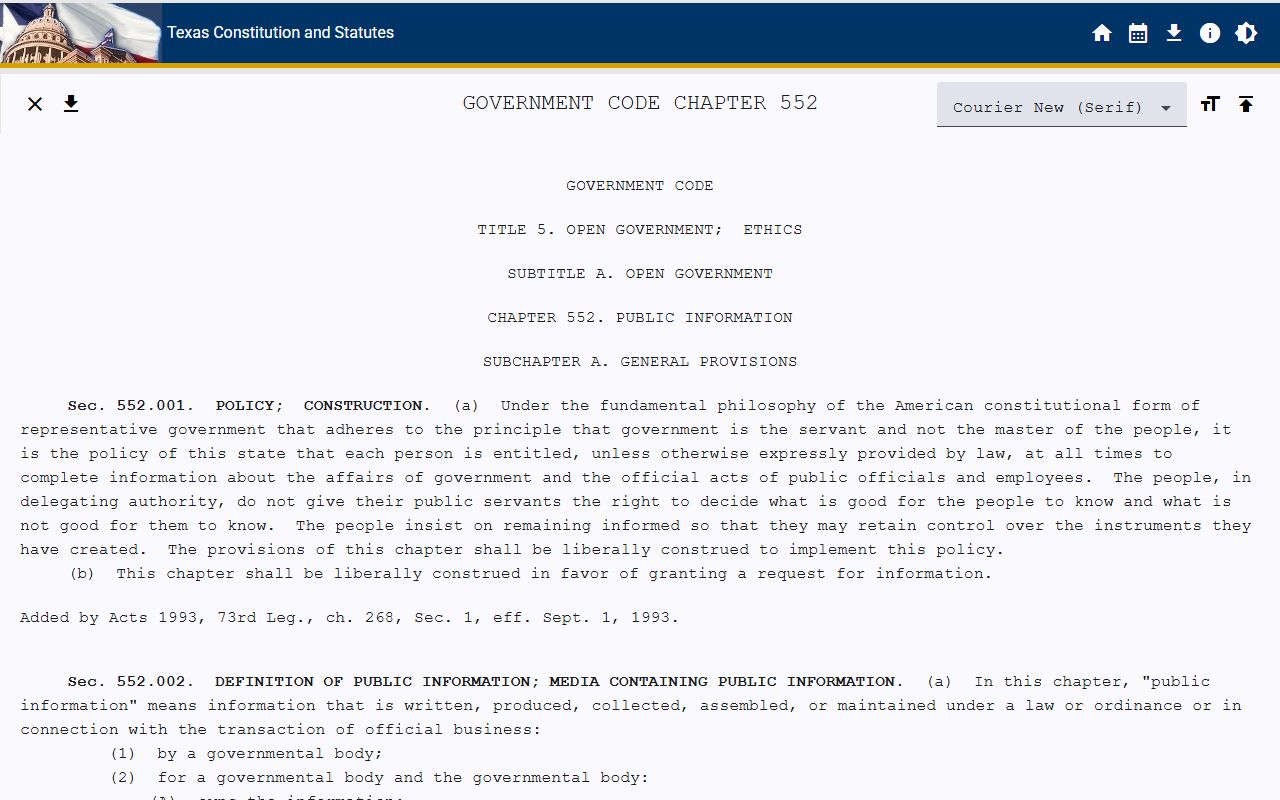
Under the Texas Government Code Chapter 552, most divorce records in Calhoun County are public and available to anyone who requests them from the District Clerk's office in Port Lavaca.
Calhoun County Divorce Filing Fees
Filing fees in Calhoun County are based on the Texas statutory schedule plus local court costs. A standard divorce without children typically runs around $300. Cases involving minor children have additional required filings and fees. The clerk's office can give you the exact current amount when you contact them. Always call first to get the up-to-date fee before you show up to file.
Service of process through the constable or a private process server adds to the cost. After the case ends, certified copies of the Final Decree of Divorce have per-page charges plus a certification fee. If you order multiple copies or need the records mailed, those costs add up. Plan ahead and request enough copies to cover your needs so you avoid returning for more.
If you cannot pay the fees, Texas Rule of Civil Procedure 145 lets you ask the court to waive them. You file a Statement of Inability to Afford Payment of Court Costs and show the court your financial situation. If approved, you can proceed without paying upfront. The form is available at txcourts.gov or at the Calhoun County Courthouse.
Divorce Filing Process in Calhoun County
Calhoun County divorce cases go through the 135th Judicial District Court. All proceedings follow Texas Family Code Chapter 6. Documents filed at each stage become part of the official record maintained by the District Clerk in Port Lavaca.
The first requirement is residency. Under Texas Family Code Section 6.301, one spouse must have lived in Texas for six months and in Calhoun County for at least 90 days before filing. If that requirement is not yet met, you must wait before the case can be filed here.
Texas allows no-fault divorce on the ground of insupportability under Texas Family Code Section 6.001. This means the marriage has broken down and cannot be fixed. You do not have to show anyone did anything wrong. Fault grounds, including cruelty, adultery, abandonment, and others in Chapter 6, are also available when the facts support them.
After filing, Texas imposes a mandatory 60-day waiting period under Texas Family Code Section 6.702. No final decree can be signed until 60 days pass. Agreed cases can close quickly after that. Contested cases take longer, particularly when property or child custody is at issue. Property is divided under the community property rules in Texas Family Code Chapter 7, and spousal maintenance under Chapter 8.
What Calhoun County Divorce Decrees Contain
A divorce case file at the Calhoun County District Clerk's office holds all the documents filed during the case. It starts with the original petition for divorce, which states the grounds and what the petitioner wants the court to do. Temporary orders, financial affidavits, property lists, settlement agreements, and any responses filed by the other spouse are added as the case moves forward.
The Final Decree of Divorce is the document that ends the marriage. It is a court order signed by the judge that spells out all the terms: who keeps what property, who is responsible for which debts, how custody of children is arranged, what the possession and access schedule looks like, how much child support is owed, and whether any spousal maintenance is ordered. You need certified copies of this document to make name changes official, deal with real estate, and handle other post-divorce matters.
Divorce records in Calhoun County are generally public. Anyone can request copies, whether or not they were part of the case. Some materials in the file may be sealed by court order, such as certain financial exhibits or records tied to protective orders. The clerk's office can tell you if a file contains sealed portions and how to request access to them if needed.
Legal Resources for Calhoun County
People in Calhoun County dealing with a divorce can access several free and low-cost legal resources. TexasLawHelp.org provides free guides on how to file for divorce in Texas, how to serve the other spouse, and how to complete the process without a lawyer. Official court forms are available through the site. It covers both agreed and contested divorces and includes specific guides for cases with children.
The State Bar of Texas referral line at (800) 252-9690 can help you find a family law attorney in the Port Lavaca or Coastal Bend area. Gulf Coast Legal Services and other area legal aid organizations may be able to help income-eligible residents with family law matters. The Texas State Law Library divorce guide covers the process in plain language and links to key statutes. Court forms are also at txcourts.gov.
For child support questions, the Texas Attorney General's Child Support Division provides free services for establishing, modifying, and enforcing child support orders. This is available to all Texas residents and does not require hiring a private attorney.
Cities in Calhoun County
No qualifying cities with a population over 100,000 are located in Calhoun County. All divorce decree filings are handled by the Calhoun County District Court in Port Lavaca.
Nearby Counties
Calhoun County sits along the Texas Gulf Coast and borders several neighboring counties. File in the county where you or your spouse has lived for the past 90 days to meet the Texas residency requirement.