
Briscoe County Divorce Decree Records
Briscoe County divorce decree records are kept at the District Clerk's office in Silverton, Texas. If you need to find a divorce case or get a certified copy of a final decree, the District Clerk handles all family law filings for the county. Briscoe is a small rural county in the Texas Panhandle, and most records requests are handled in person or by mail. You can also use the statewide re:SearchTX portal to find basic case information before you contact the office directly.
Briscoe County Overview
Briscoe County District Clerk
The District Clerk in Briscoe County is the official keeper of all divorce decree records. The office handles family law filings, stores case files, and responds to requests for certified copies of final decrees. Because Briscoe is a small county, the clerk's office serves a limited number of cases each year, which can make in-person service more accessible than in larger urban counties. Staff are usually reachable by phone to answer questions about finding a case or ordering records.
The courthouse sits in Silverton, which is the county seat and the main hub for all official county business. Divorce filings in Briscoe County go through the 110th Judicial District Court. If you are not sure whether your case was filed in this county or a neighboring one, the clerk can help you check by name or cause number. Bring a government-issued ID when you visit in person.
| Office | Briscoe County District Clerk |
|---|---|
| Address | 415 Main St. Silverton, TX 79257 |
| Phone | (806) 823-2131 |
| Hours | Monday through Friday, 8:00 AM to 5:00 PM |
| Website | co.briscoe.tx.us |
Find Briscoe County Divorce Decrees
Searching for a divorce decree in Briscoe County can be done in a couple of ways. The county has limited online access compared to larger Texas counties. For most searches, you will need to contact the District Clerk's office directly or use the statewide re:SearchTX system. That portal lets you search across Texas district courts by party name or cause number without going to the courthouse.
When you contact the clerk's office, be ready to give the full name of at least one party in the case, the approximate year it was filed, and the cause number if you have it. The clerk can search by name and tell you what documents are on file. For certified copies of the divorce decree itself, you need to make a formal request and pay the copy fee. The office can mail copies if you cannot come in person.
The Texas State Law Library divorce guide explains how to request court records across the state. It also covers how to find cases if you are not sure which county handled the filing. For older divorce records in Briscoe County, records go back to when the county was organized in the late 1800s, though some early records may be in limited condition.
Note: Briscoe County does not have its own web-based case search portal, so the statewide re:SearchTX system is your best free online option before calling the clerk.
The Texas Department of State Health Services keeps divorce indexes going back to 1968. If you just need to confirm a divorce happened rather than get a full decree copy, DSHS can issue a verification letter.
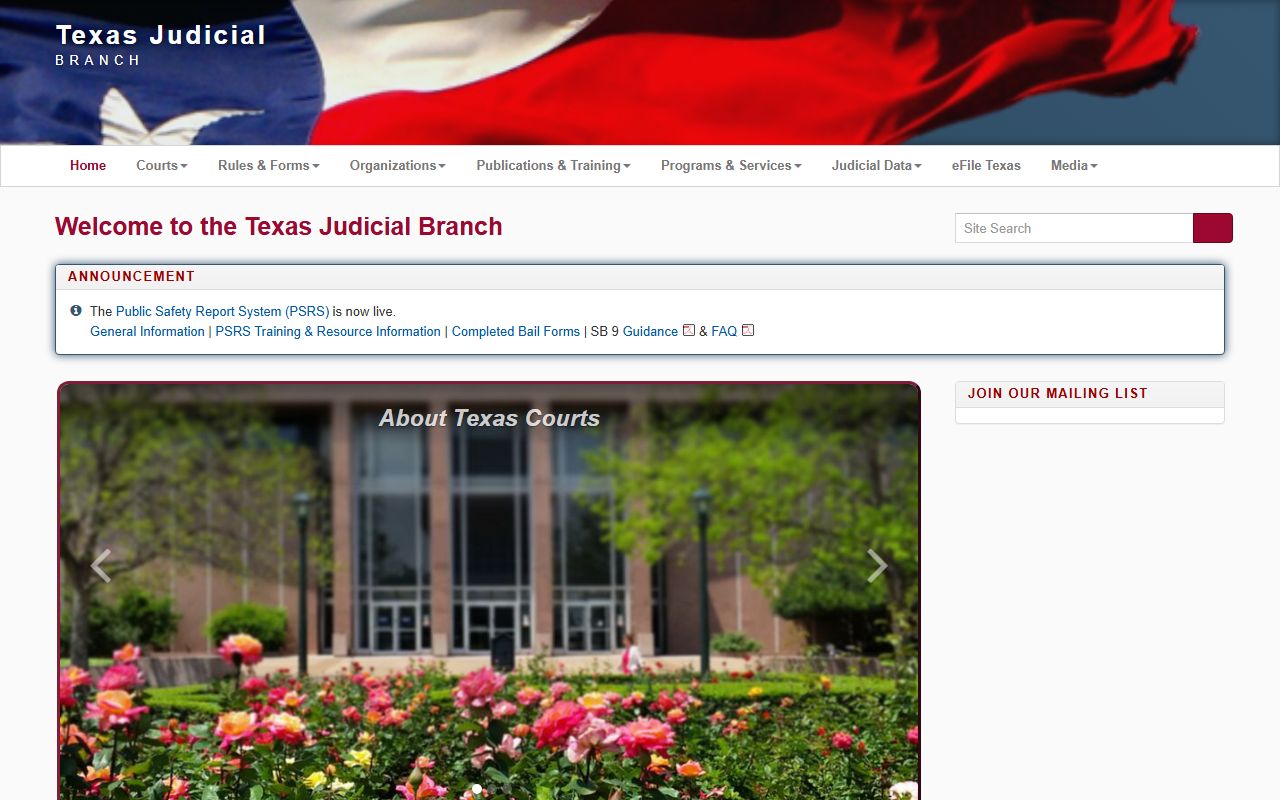
The Texas Judicial Branch website at txcourts.gov provides links to district court resources and the statewide case search system used for Briscoe County divorce records.
Briscoe County Divorce Decree Fees
Filing fees in Briscoe County follow the Texas state fee schedule along with local court costs set by the county. A standard divorce filing generally runs around $300, though the exact amount varies based on the type of case and any additional filings. Cases involving children may cost slightly more. The District Clerk can give you a current fee list when you call or stop by the office.
Beyond the filing fee, other costs come up during a divorce case. Serving the other party through the constable adds to the total. If you need certified copies of the final decree after the case closes, expect a per-page fee plus a certification charge. Mailing fees apply if you want documents sent to you by mail rather than picked up in person.
If you cannot afford the fees, Texas law provides a way to ask the court to waive them. You file a Statement of Inability to Afford Payment of Court Costs under Rule 145 of the Texas Rules of Civil Procedure. The court reviews your financial situation and decides if the waiver applies. Forms for this are available at txcourts.gov or at the courthouse.
Note: Fee amounts change over time. Call the Briscoe County District Clerk at (806) 823-2131 to confirm current costs before you file.
Divorce Filing Process in Briscoe County
Divorce cases in Briscoe County are handled by the 110th Judicial District Court. The process follows Texas state law under Texas Family Code Chapter 6. Every document filed, from the original petition to the final signed decree, becomes part of the public case record kept by the District Clerk.
You must meet the residency rule before filing. Under Texas Family Code Section 6.301, at least one spouse must have lived in Texas for six months and in Briscoe County for at least 90 days before filing the petition. If you recently moved to Silverton or anywhere else in the county, you may need to wait before you can file here.
Texas allows no-fault divorce. Most people in Briscoe County file on the ground of insupportability under Texas Family Code Section 6.001. This means the marriage has broken down with no real chance of repair. You do not need to prove who was at fault. Fault grounds like cruelty or adultery can also be used when they apply.
After filing, a mandatory 60-day waiting period applies under Texas Family Code Section 6.702. The court cannot grant the divorce until at least 60 days have passed since the petition was filed. Most cases in rural counties like Briscoe take longer than the minimum, especially when property issues need to be resolved. Agreed divorces move faster than contested ones.
Property division in Texas follows community property rules under Texas Family Code Chapter 7. The court divides what was acquired during the marriage in a way it finds just and right. What each spouse owned before the marriage, or received as a gift or inheritance kept separate from marital funds, is generally not subject to division.
Spousal maintenance rules are set under Texas Family Code Chapter 8. Not every divorce results in maintenance. The court looks at the length of the marriage, financial need, and whether one spouse is able to work, among other factors. If maintenance is ordered, the terms become part of the final decree.
What Briscoe County Divorce Decrees Contain
A divorce case file at the Briscoe County District Clerk's office contains several documents. The original petition for divorce starts the record. It states the grounds and what the filing party is asking the court to do. If temporary orders were issued during the case, those are in the file too. Financial affidavits, property inventories, and any agreed settlement documents all get filed as part of the case.
The Final Decree of Divorce is the document most people need. It is the signed court order that legally ends the marriage. The decree spells out how property and debts are divided, what conservatorship arrangement applies to any children, the possession and access schedule, child support amounts, and any spousal maintenance. Certified copies of the decree are needed for things like changing a name on a driver's license, updating Social Security records, handling bank accounts, or dealing with real estate.
Most divorce records at the District Clerk's office in Silverton are public. You do not have to be a party to the case to request copies. Some materials in the file may be sealed by court order, such as certain financial exhibits or records tied to protective orders. For sealed records, you follow a separate request process.
- Original Petition for Divorce
- Citation and proof of service
- Temporary orders (if issued)
- Financial affidavits and property inventories
- Final Decree of Divorce
- Child support or conservatorship orders (if applicable)
Note: The Texas DSHS divorce verification service at dshs.texas.gov covers divorces filed since 1968 and can confirm a divorce occurred without providing a full copy of the decree.
Legal Help for Briscoe County Residents
People in Briscoe County looking for help with a divorce have options, even in a rural area. TexasLawHelp.org is a free online resource with step-by-step guides for filing divorce in Texas without an attorney. It also has links to all the official court forms you need to start a case, respond to a petition, or finalize a decree. The site is maintained by legal aid groups across Texas and stays current with state law.
The State Bar of Texas runs a lawyer referral service at (800) 252-9690. If you want to hire an attorney and need help finding one who handles family law cases in the Panhandle area, the referral service can point you in the right direction. The Texas State Law Library divorce guide is another free resource. It covers the full divorce process in plain language and links to relevant statutes and forms. Official court forms are also at txcourts.gov.
For child support matters, the Texas Attorney General's Child Support Division can help enforce or modify child support orders. This service is free and does not require a private attorney. If your divorce decree includes child support terms, the AG's office can assist with collection through wage withholding and other tools available under state law.
Cities in Briscoe County
No qualifying cities with a population over 100,000 are located in Briscoe County. All divorce decree filings go through the Briscoe County District Court in Silverton.
Nearby Counties
Briscoe County borders several other Texas Panhandle counties. If you are not sure which county handles your divorce case, confirm where you have lived for the past 90 days. That is the county where you must file.