
Andrews County Divorce Decree Records
Andrews County divorce decree records are filed with the District Clerk's office in Andrews and handled through the 109th District Court. If you need to search for a divorce case or get a certified copy of a final decree, you can do that in person at the courthouse or through the county's online portal. The 109th District Court covers Andrews County along with Crane and Winkler counties, and the clerk's staff can help you locate records going back many years. Whether you are searching for your own records or researching a case, this guide covers every step.
Andrews County Overview
Andrews County District Clerk
The District Clerk's office in Andrews is the official keeper of all divorce records for Andrews County. Every divorce petition filed in the county goes through this office. The clerk assigns case numbers, stores court documents, and handles all requests for copies. Staff can search by party name or cause number and make copies for you while you wait.
Andrews County is served by the 109th District Court, which also covers Crane County and Winkler County. If you need to file or search divorce records, you always go to the Andrews County courthouse. The clerk's fees are set by Texas state statute and apply to all cases. The county uses the Tyler Technologies self-service web portal at andrewscountytx-web.tylerhost.net for public record searches. Note that the portal index works much like a library card catalog, so try all possible spelling variations of a name if your first search does not return results.
| Office | Andrews County District Clerk |
|---|---|
| Address | Andrews County Courthouse Andrews, TX 79714 |
| Phone | (432) 524-1426 |
| Hours | Monday through Friday, 8:00 AM to 5:00 PM |
| District Court | 109th District Court (Andrews, Crane, Winkler Counties) |
| Online Portal | andrewscountytx-web.tylerhost.net |
When you visit the courthouse, bring a photo ID. The clerk's office requires identification for most records requests. Staff cannot give legal advice, but they can tell you how to get a copy of your decree and what forms to bring.
Search Andrews County Divorce Records
You have two main ways to search for a divorce decree in Andrews County: online through the county portal or in person at the courthouse. The online portal gives you access to index records at any time. In-person visits let you view the full case file and get certified copies right away.
The Andrews County self-service web portal at andrewscountytx-web.tylerhost.net lets you search Official Public Records by name. The system is free to use for basic index searches. Document images may require payment. The portal does not certify the records it shows, so use it to locate a case and then contact the clerk for certified copies. You can also use the statewide re:SearchTX system to find Andrews County divorce cases by party name or cause number.
For in-person searches, go to the Andrews County District Clerk's office at the courthouse. Tell the clerk you are looking for a divorce record and give them the names of both parties. If you have the cause number, that speeds things up. Staff can also search by year if you know roughly when the case was filed. You can get plain copies or certified copies the same day in most cases.
When searching, try different spellings of names. Hyphenated last names, maiden names, and name changes after marriage can all affect how a record is indexed. The clerk's staff is used to this and can help you try different searches.
The Andrews County public records portal provides free index access to help you find divorce filings before you visit the courthouse.
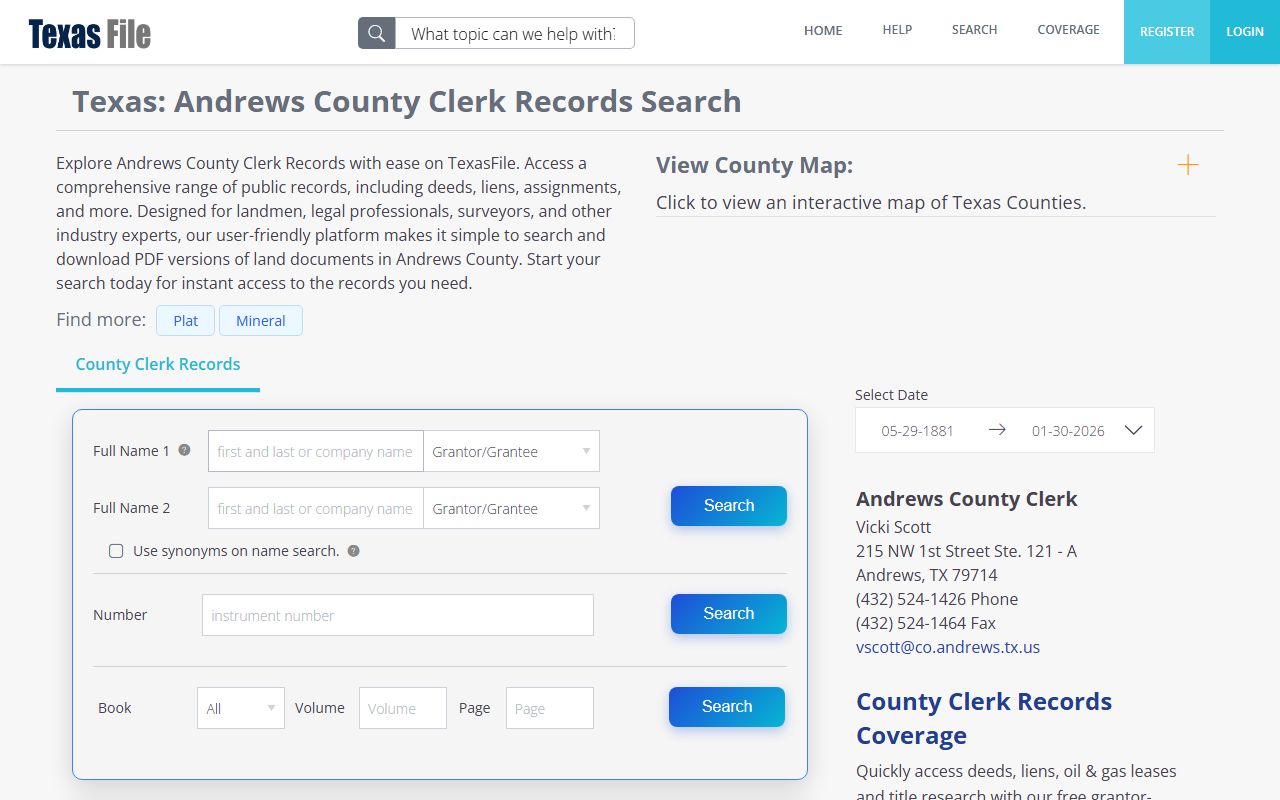
The online portal shows case index information for divorce and other civil filings handled by the 109th District Court.
Note: The portal index is for reference only. For certified copies of a divorce decree, contact the District Clerk directly.Andrews County Divorce Filing Fees
Filing fees in Andrews County follow the schedule set by the District Clerk under Texas state statute. The fee to file a new divorce case is typically around $300, though the exact amount depends on the type of case and any surcharges that apply. Cases involving children may run slightly higher. The clerk does not issue refunds for fees less than $10, and fees paid through e-file are also non-refundable.
Once a case is filed, you may need copies of the divorce decree. Plain copies cost $1.00 per page. Certified copies cost $1.00 per page plus a certification fee. If you need documents mailed, ask the clerk about any additional mailing fees. The clerk accepts checks, money orders, and in many cases debit or credit cards. Confirm payment methods when you call or visit.
People who cannot afford to pay court costs can apply for a fee waiver. Under Texas Rule of Civil Procedure 145, you file a Statement of Inability to Afford Payment of Court Costs. You show proof that you cannot pay, such as proof of income or public benefits. Forms are available at the courthouse or online at txcourts.gov/rules-forms. The court reviews your request and decides if you qualify.
Tip: Divorce suits in Andrews County require a BVS 165 form filed with the petition under Health and Safety Code Section 192.009. Ask the clerk about this form before you file.
Filing for Divorce in Andrews County
Divorce cases in Andrews County go through the 109th District Court under Texas Family Code Chapter 6. Every step you take creates a record that becomes part of your case file. The District Clerk stores all of those documents at the courthouse.
Before you file, you need to meet the residency requirement. Under Texas Family Code Section 6.301, at least one spouse must have lived in Texas for six months and in Andrews County for at least 90 days before filing. If you do not meet that requirement yet, you need to wait or file in a different county where one of you does qualify.
Texas law allows both no-fault and fault-based grounds. Most people use the no-fault ground of "insupportability" under Texas Family Code Section 6.001. This means the marriage cannot continue because of conflict with no real chance of reconciliation. Fault grounds include cruelty, adultery, abandonment, felony conviction, and living apart for at least three years. The ground you choose can affect how the court divides property.
Once you file the Original Petition for Divorce, Texas law requires a 60-day waiting period before the divorce can be granted. This comes from Texas Family Code Section 6.702. The wait starts on the day you file, not when the other spouse is served. Exceptions exist in cases involving family violence.
If both parties agree on all terms, you can file an agreed decree and skip a trial. If you disagree on things like property division or child custody, the case may go to mediation or a hearing before the judge. The judge signs the Final Decree of Divorce, and that document becomes the official Andrews County divorce record.
Note: All out-of-county service documents are returned to the attorney of record by the Andrews County District Clerk. Plan accordingly if service must happen outside Andrews County.
What Andrews County Divorce Decrees Contain
A divorce decree in Andrews County is the court order that ends the marriage. It is the document you will need most often for legal purposes. The Final Decree of Divorce spells out every term the judge ordered, including who gets what property, any debt division, conservatorship of children, the possession schedule, child support amounts, and any spousal maintenance.
The full case file held by the District Clerk contains more than just the decree. It includes the Original Petition for Divorce, any temporary orders, financial affidavits, property agreements, and all motions filed during the case. If children are involved, there will be parenting plan documents and possibly a Standard Possession Order. All of these are part of the public record unless the court has sealed them.
Most divorce records in Andrews County are public. You do not have to be a party to the case to request copies. That said, some information gets redacted. Social Security numbers, bank account numbers, and similar financial details may be removed from documents given to the public. Records related to minors may have limited access in some situations.
Property division in Texas follows community property rules. Under Texas Family Code Chapter 7, the court divides marital property in a way it finds just and right. Anything acquired during the marriage is generally community property. Separate property, meaning what you owned before marriage or received as a gift or inheritance, stays with you as long as it was kept separate.
Legal Help for Andrews County Divorce
If you need help with a divorce case in Andrews County, several resources are available. Some are free for people with low income. Others offer self-help tools so you can handle the process on your own. Knowing where to look can save you time and money.
TexasLawHelp.org has free guides, forms, and step-by-step instructions for filing a divorce without a lawyer. The site covers the whole process from start to finish and is updated regularly by legal aid organizations across the state. You can also find official court forms at txcourts.gov/rules-forms.
The State Bar of Texas runs a lawyer referral service you can reach at (800) 252-9690. They can match you with a family law attorney in or near Andrews County. The Texas State Law Library divorce guide is another good starting point. It explains the law in plain terms and points you toward the right forms and agencies. If children or child support are part of your case, the Texas Attorney General's Child Support Division handles enforcement and services statewide.
You can also file documents electronically through eFileTexas.gov. E-filing is required for civil cases in many Texas courts, including the 109th District Court. If you are not sure whether your filing needs to go through e-file, call the Andrews County District Clerk before you submit anything.
Cities in Andrews County
Andrews County has one main city. All divorce cases filed in the county go through the 109th District Court at the Andrews courthouse.
Andrews is the county seat and the largest city in the county. No other cities in Andrews County meet the population threshold for a dedicated page. All residents file divorce cases at the Andrews County District Clerk's office regardless of which part of the county they live in.
Nearby Counties
These counties border Andrews County. If you are not sure which county handles your case, check where you have lived for the past 90 days. That is where you file.